Uinta Basin oil transport sits at the center of one of the West’s most familiar policy collisions: the push to move more energy to market, the obligation to protect irreplaceable cultural landscapes, and the legal constraints of federal environmental law. That tension sharpened on April 28, 2026, when the Bureau of Land Management approved the Wells Draw Road Amendment for the Gate Canyon project in eastern Utah.
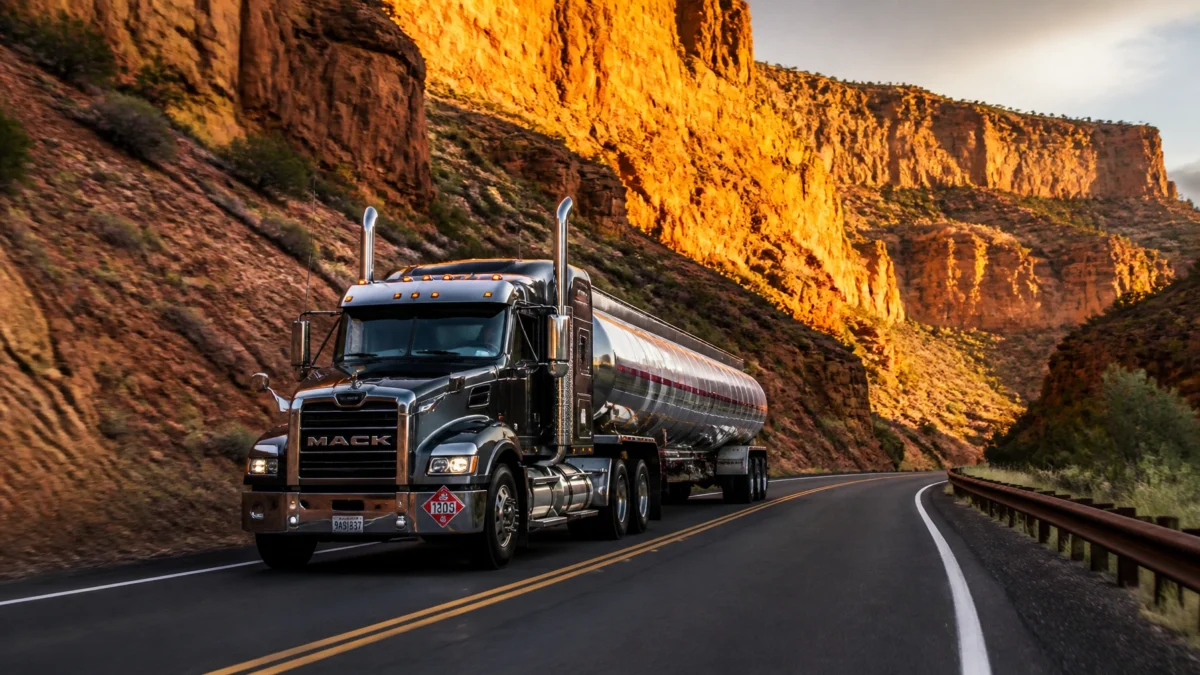
The decision allows Duchesne County to pave 5.3 miles of County Road 32, creating a route designed to accommodate 70-foot oil tankers moving through Gate Canyon. BLM said the corridor could support up to 1,000 vehicles per day. On paper, that sounds like a road upgrade. In practice, it is a strategic transportation decision for the Uinta Basin, where producers have long faced a basic challenge: getting crude out of a prolific but geographically constrained region.
Without additional road capacity, oil transport in the basin has remained tied to a network of routes that can be limiting for large commercial traffic, especially as production logistics demand more reliable movement of field supplies and outbound crude. That is why this approval matters beyond the immediate 5.3-mile paving plan. It reflects a broader effort to improve the physical links between basin production and the downstream markets, terminals, and refining systems that ultimately determine whether barrels can move efficiently and profitably.
Why the Uinta Basin Needs the Gate Canyon Route
The Wells Draw Road Amendment covers a section of County Road 32 in Gate Canyon near Nine Mile Canyon. Project documents describe the route as a transportation corridor for oil field traffic from the Uinta Basin, and the approved configuration is specifically intended to allow 70-foot tanker trucks to use it.
That detail is important because transport constraints often shape the economics of an oil basin just as much as geology does. The Uinta Basin has productive resources, but production growth and day-to-day operations depend on whether equipment, trucks, and crude volumes can move safely and consistently through rugged terrain. A corridor built to handle larger tanker traffic can reduce bottlenecks, improve routing options, and create more predictable flow for operators and county infrastructure planners alike.
BLM’s April 28, 2026 approval through its Vernal Field Office decision process therefore signals more than a local access change. It indicates federal support for a transportation improvement that county and industry stakeholders see as necessary to sustain basin activity.
Key project facts include:
- BLM approval date: April 28, 2026
- Federal decision: Wells Draw Road Amendment
- Road segment: 5.3 miles of County Road 32
- Intended vehicle class: 70-foot oil tankers
- Estimated traffic capacity: up to 1,000 vehicles per day
Those numbers explain why supporters view the project as infrastructure, not just pavement. In an energy-producing region, road design can function as market access.
The Clash Between Energy Transport and Cultural Preservation
The strongest opposition to the Gate Canyon project is tied to where this route sits, not just what it is meant to carry. Gate Canyon provides access to Nine Mile Canyon, an area widely known for its archaeological importance, including rock art and other historic and cultural resources. That geography has made the project a flashpoint.
For preservation advocates, the concern is straightforward: once a corridor is widened, paved, and opened to heavier traffic, the surrounding landscape does not experience that change as an isolated engineering event. Increased use, noise, dust, vibration, and industrial traffic can alter the conditions around culturally sensitive areas even if the project itself is framed as a road amendment. In places such as Nine Mile Canyon, where the cultural value is embedded in the landscape as much as in individual artifacts, infrastructure decisions can take on outsized significance.
This is why the archaeology angle has drawn such strong reaction. Nine Mile Canyon is not merely adjacent land in the eyes of opponents; it is part of a historically and culturally significant setting that they argue deserves heightened protection. In the Western United States, this kind of dispute is common because energy corridors, federal lands, and heritage landscapes often overlap. The result is a recurring conflict in which one side emphasizes access, safety, and economic continuity, while the other emphasizes the cumulative risk to places that cannot be replaced once damaged or degraded.
Public filings and project materials have repeatedly pointed to these concerns, and critics have used the Nine Mile Canyon issue to argue that the stakes are larger than local transportation planning. In that sense, the road debate has become a proxy for a bigger question: how much industrial accommodation should be allowed near landscapes valued for archaeology and cultural history.
Legal Challenges and What Comes Next
The approval is also unlikely to be the final word because legal pressure began almost immediately. The Southern Utah Wilderness Alliance and the Center for Biological Diversity filed notices of intent to sue following the decision.
Their challenge centers on Endangered Species Act claims, while also referencing the broader impacts associated with the road approval and the use of the corridor for expanded tanker traffic. That matters for the project timeline because a notice of intent to sue is often the opening move in a longer legal process, one that can delay implementation even when an agency has already issued its decision.
For readers outside the permitting world, the practical takeaway is this: an agency approval does not always mean a project is politically or legally settled. In federal land management, developers and local governments may secure a record of decision, only to face further review in court if advocacy groups believe the agency failed to meet statutory obligations. Here, the Endangered Species Act claims create a legal lane for opponents, while Nine Mile Canyon concerns reinforce the broader public-interest argument against the route.
What comes next will likely hinge on whether the legal challenges remain at the notice stage, develop into active litigation, or prompt additional federal review. The central dispute is already clear. Supporters see the Wells Draw Road Amendment as a needed transportation upgrade for Uinta Basin oil development. Opponents see it as an avoidable risk to sensitive resources near Nine Mile Canyon and a potential failure of federal environmental review.
That is why Gate Canyon now looks like a classic Western energy development conflict. It is not only about 5.3 miles of County Road 32. It is about whether the systems that move hydrocarbons can be expanded near landscapes protected by law, valued for archaeology, and defended by national conservation groups. In the Uinta Basin, those competing priorities are no longer theoretical. They are now on the same road.
Keep In Touch with Shale Magazine
As the new era of energy unfolds, you can bet we’ll be the boots on the ground to keep you informed. Subscribe to Shale Magazine for sharp insight into the arenas that matter most to your life. And don’t forget to listen to our riveting podcast, The Energy Mixx Radio Show, where our very own Kym Bolado interviews the most extraordinary thought leaders, business innovators, and industry experts of our time.
Subscribe to get more posts from Amanda Jenkins