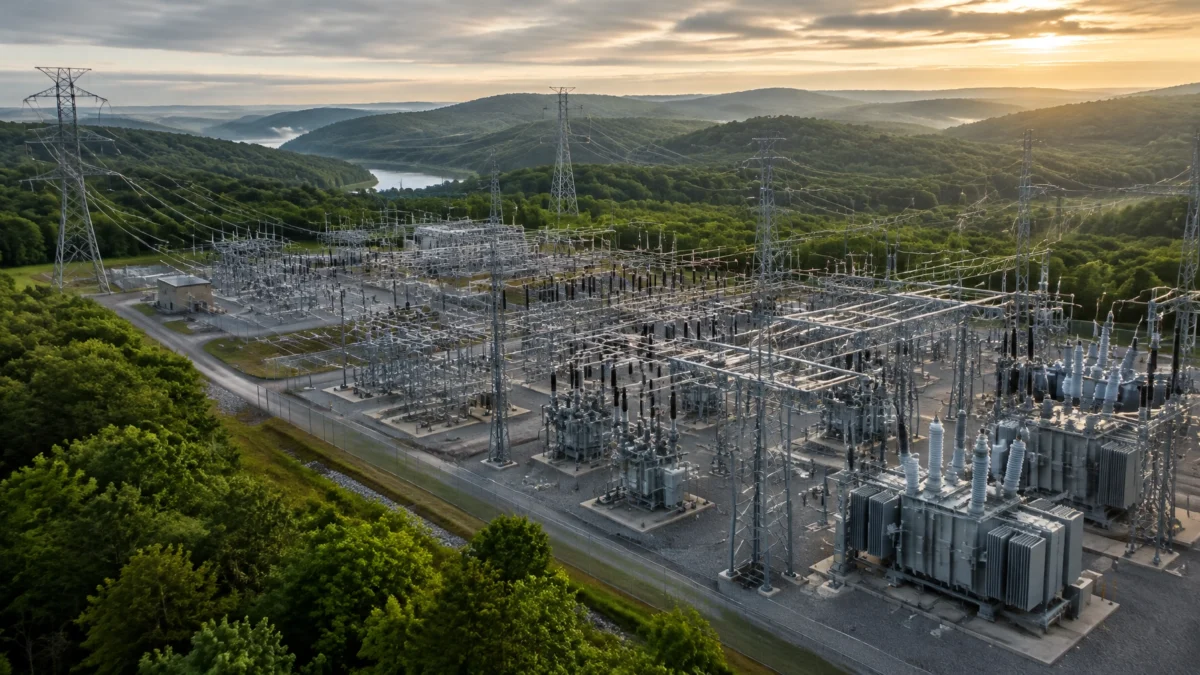
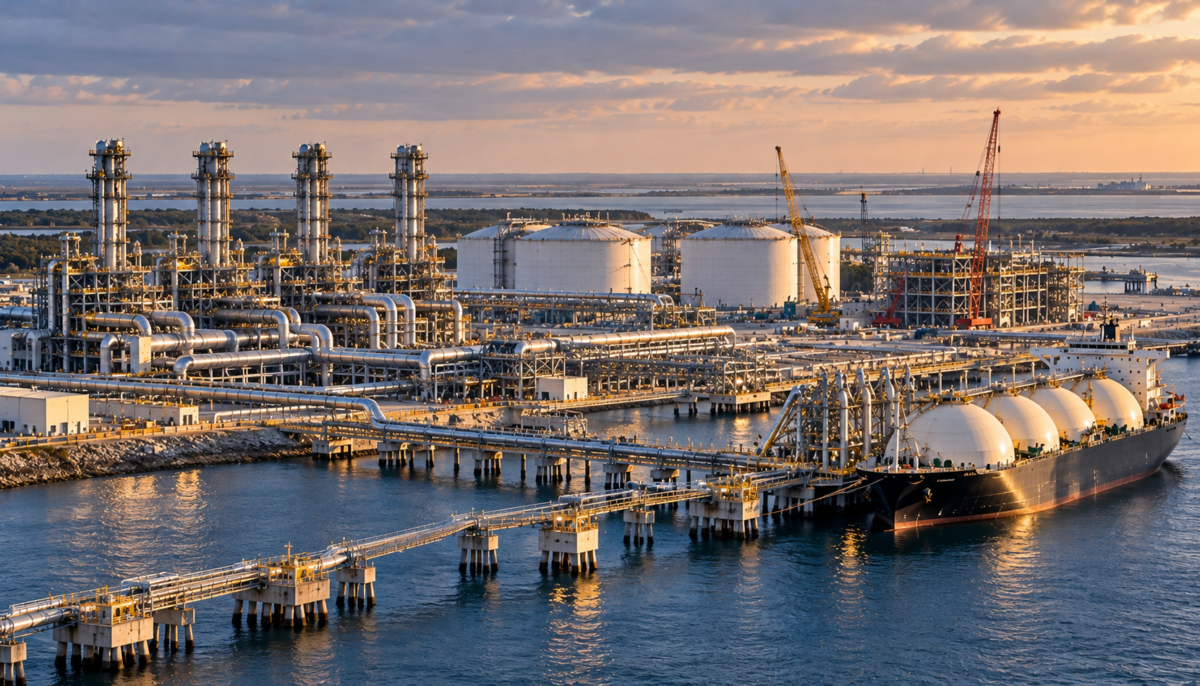
The new FERC LNG proposal could give Texas operators a more predictable route for eligible improvements at existing liquefied natural gas facilities. The opportunity is not an immediate increase in export capacity. It is a potential change in how the Federal Energy Regulatory Commission authorizes certain construction, replacement, expansion and abandonment activities.
On October 15, the commission unanimously proposed establishing its first blanket authorization program for LNG facilities. Instead of requiring a separate case-specific authorization order for every qualifying project, the proposed regulations would divide eligible activities into automatic, 60-day prior-notice and 90-day prior-notice categories.
The framework remains a Notice of Proposed Rulemaking, or NOPR. LNG developers cannot use it until FERC reviews comments, decides whether to issue a final rule and establishes an effective date. Even after adoption, an operator would have to demonstrate that a proposed activity satisfies the applicable engineering, environmental, safety, location and notification requirements.
What The FERC LNG Proposal Would Change
FERC regulates the siting, construction, expansion and operation of LNG facilities under Sections 3 and 7 of the Natural Gas Act. Section 3 generally covers LNG import and export terminals. Section 7 applies to certain facilities that receive natural gas or LNG, liquefy or store it and later regasify it for delivery in interstate commerce.
Existing LNG operators may already modify authorized or operating plants, but some work requires a case-specific application and a new public-interest determination. FERC’s staff presentation explains that the proposed blanket program is intended to create a standardized route for defined categories of work that meet predetermined conditions.
The proposal is modeled partly on FERC’s existing blanket-certificate program for interstate pipelines. That program allows qualifying pipeline projects to proceed automatically or through prior-notice procedures rather than requiring a complete case-specific certificate proceeding.
The proposed LNG framework would apply to both Section 3 terminals and Section 7 plants. Unlike the existing pipeline program, however, LNG blanket projects would not be divided by construction-cost limits. Eligibility would instead depend on the type, location and effects of the proposed work.
The Three Proposed Authorization Paths
Automatic authorization
The first category would cover certain construction, replacement or abandonment activities involving LNG equipment or supporting systems.
To qualify, an activity could not:
- Increase the plant’s authorized capacity.
- Expand the authorized vertical or horizontal limits within the existing plant footprint.
- Cause flows, levels, volumes, pressures, temperatures, compositions or loads to exceed the design limits of new or existing equipment.
Eligible work could proceed automatically after the required landowner and community notifications. Operators would still be responsible for satisfying the program’s conditions and reporting requirements.
This category appears intended for limited work that does not materially enlarge the plant’s authorized operating envelope. Equipment replacement or safety and reliability improvements could potentially qualify, but eligibility would depend on the actual design and operational effects.
Sixty-day prior notice
The proposed 60-day process would cover activities similar to those permitted automatically, but it could include work that increases an LNG plant’s authorized capacity.
According to FERC’s presentation, the work would have to remain within the existing plant footprint, avoid significant adverse effects on reliability or public-safety risks and stay within the design limits of the affected and remaining equipment.
That distinction is important. The proposal does not say that every project capable of increasing capacity would receive authorization in 60 days. It establishes a notice and protest period for work that satisfies specified eligibility requirements.
Commission staff and other stakeholders would have an opportunity to review and protest a prior-notice filing. Questions involving engineering limits, environmental effects, safety, land use or eligibility could prevent a project from proceeding through the streamlined route.
Ninety-day prior notice
The 90-day category could cover specified new LNG facilities, including liquefaction trains, storage tanks, marine berths and related auxiliary systems.
Eligible construction could extend outside an existing plant footprint, but the proposal would impose additional limits. According to FERC, the project could permanently occupy no more than 25 acres of previously disturbed or developed land or waterways located within an industrial zone or an area without zoning.
The facilities would also have to use the same in-kind or upgraded LNG equipment and auxiliary systems that FERC previously evaluated and authorized at the terminal or plant.
FERC is specifically requesting comments on whether the 25-acre limit is appropriate, whether additional restrictions should apply to work beyond existing plant boundaries and whether the commission should establish eligibility standards for parties filing protests.
A Notice Period Is Not A Construction Schedule
The proposed 60-day and 90-day periods refer to regulatory notice and protest procedures. They should not be interpreted as guaranteed timelines from project conception to commercial operation.
An LNG improvement may still require engineering, procurement, financing, local approvals, state permits, federal consultations, construction and commissioning. Specialized equipment such as cryogenic systems, compressors, heat exchangers, storage tanks, loading equipment and safety systems can have long manufacturing and installation schedules.
An operator would also need to establish that the work fits the blanket program. A proposal falling outside the adopted limits could still require a case-specific FERC authorization.
The streamlined path could therefore shorten one part of the regulatory process without eliminating the physical, commercial or legal steps required to place equipment into service.
Why The Proposal Matters For Texas LNG Operators
Texas is central to the expanding U.S. LNG export system. Existing and developing facilities along the Gulf Coast connect domestic natural gas production with overseas markets, while pipelines, storage facilities, ports, engineering companies and equipment suppliers support terminal operations.
ENMG has been following how U.S. LNG exports are responding to changing international markets. As export facilities operate for longer periods and respond to changing demand, operators may need to replace components, improve reliability, modify processes or add equipment within existing industrial sites.
A clearer authorization structure could give operators more information about which activities might qualify for streamlined treatment. That could improve early project planning and help engineering firms, construction contractors and equipment suppliers assess the likely regulatory route.
The potential benefit remains conditional. FERC has not announced that any specific Texas project qualifies, and the proposal does not award contracts or commit capital spending. A clearer process could support investment decisions, but actual economic activity would depend on final regulations, project eligibility, customer demand, financing and operator approval.
The development also fits into a wider North American infrastructure cycle. ENMG’s analysis of midstream energy infrastructure investment explains how LNG growth is increasing demand for pipelines, storage and associated delivery systems. Plant improvements cannot be evaluated entirely in isolation because additional liquefaction capability also depends on adequate feed-gas supply and pipeline capacity.
Environmental and Engineering Safeguards Remain
The proposal would not eliminate environmental review.
FERC says prior-notice projects would either receive a project-specific analysis under the National Environmental Policy Act or qualify for a categorical exclusion. The commission also plans to establish standard environmental and engineering design conditions for blanket projects.
The proposal would require blanket authorization holders to obtain a Letter of Determination from the Pipeline and Hazardous Materials Safety Administration, or confirmation that such a letter is unnecessary.
For prior-notice work at Section 3 LNG terminals, the proposed requirements could also include:
- A new or updated U.S. Coast Guard Letter of Recommendation, or a determination that additional Coast Guard review is unnecessary.
- State confirmation that the project does not create state or local safety concerns, or evidence that the appropriate agency was notified.
- Letters from relevant emergency-response organizations confirming consistency with the terminal’s emergency-response plan, or evidence that those organizations were notified.
- Required federal interagency consultation.
Those provisions matter because LNG facilities involve cryogenic liquids, pressurized systems, flammable vapor controls, marine operations and emergency-planning obligations. Streamlining the authorization path does not make those engineering and public-safety requirements optional.
The environmental record is also likely to receive scrutiny during the rulemaking. ENMG has previously examined environmental compliance concerns at LNG terminals. Operators, regulators and communities may disagree about which activities are sufficiently routine for blanket treatment and which should continue receiving case-specific review.
A Separate Air-Quality Proposal Should Not Be Confused With The LNG Rule
At the same October 15 meeting, FERC issued a separate draft policy statement addressing environmental review of natural gas applications.
Under that proposal, FERC would stop routinely requesting air-dispersion modeling from applicants or relying on those models when evaluating operational air-quality effects under NEPA. The commission says it would continue addressing air-quality effects using other information provided by applicants or identified by staff.
That policy is proceeding under Docket No. PL26-3-000. Comments are due November 16, 2026.
The LNG blanket-authorization proposal is a different proceeding under Docket No. RM26-2-001. Its comment period will run for 60 days after publication in the Federal Register. Until that publication occurs, the deadline should not be calculated from the October 15 announcement.
The two proceedings may affect overlapping companies, but they address different regulatory questions. One concerns how eligible LNG-facility activities could be authorized. The other concerns how FERC would evaluate operational air-quality effects in Natural Gas Act proceedings.
What The Proposal Does Not Do
The proposed LNG program does not:
- Authorize every LNG expansion automatically.
- Guarantee approval within 60 or 90 days.
- Eliminate engineering or public-safety reviews.
- Remove state, local or other federal permitting obligations.
- Establish that a particular Texas project qualifies.
- Guarantee new construction spending or employment.
- Convert proposed capacity into operating export capacity.
Those distinctions are necessary because regulatory streamlining can affect project timing without guaranteeing that equipment is financed, constructed or operated.
For producers, additional operating LNG capacity could eventually support demand for domestic natural gas. For consumers and communities, the consequences could include investment and employment but also questions involving safety, emissions, emergency response, land use and infrastructure requirements.
None of those outcomes results from the proposal alone.
What To Watch Next
The first milestone is publication of the NOPR in the Federal Register, which will establish the formal comment deadline.
The rulemaking record should clarify:
- Which maintenance, replacement and expansion activities operators believe should receive automatic authorization.
- Whether the proposed design and footprint restrictions are technically workable.
- How FERC will address protests during the 60-day and 90-day processes.
- Whether 25 acres is an appropriate limit for eligible construction outside an existing plant footprint.
- How environmental reviews and categorical exclusions will be applied.
- What documentation PHMSA, the Coast Guard, state agencies and emergency responders would provide.
- Whether a final rule gives operators enough certainty to change actual investment decisions.
The FERC LNG proposal could become a practical tool for maintaining and improving existing American energy infrastructure. Its significance, however, will depend on the final eligibility standards and whether operators can use the process without weakening engineering, environmental or public-safety protections.
For Texas businesses, the opportunity is real but still procedural. The proposal may create a clearer regulatory lane. It has not yet put a single new liquefaction train, storage tank or marine berth into operation.
Keep In Touch with Shale Magazine
As the new era of energy unfolds, you can bet we’ll be the boots on the ground to keep you informed. Subscribe to Shale Magazine for sharp insight into the arenas that matter most to your life. And don’t forget to listen to our riveting podcast, The Energy Mixx Radio Show, where our very own Kym Bolado interviews the most extraordinary thought leaders, business innovators, and industry experts of our time.