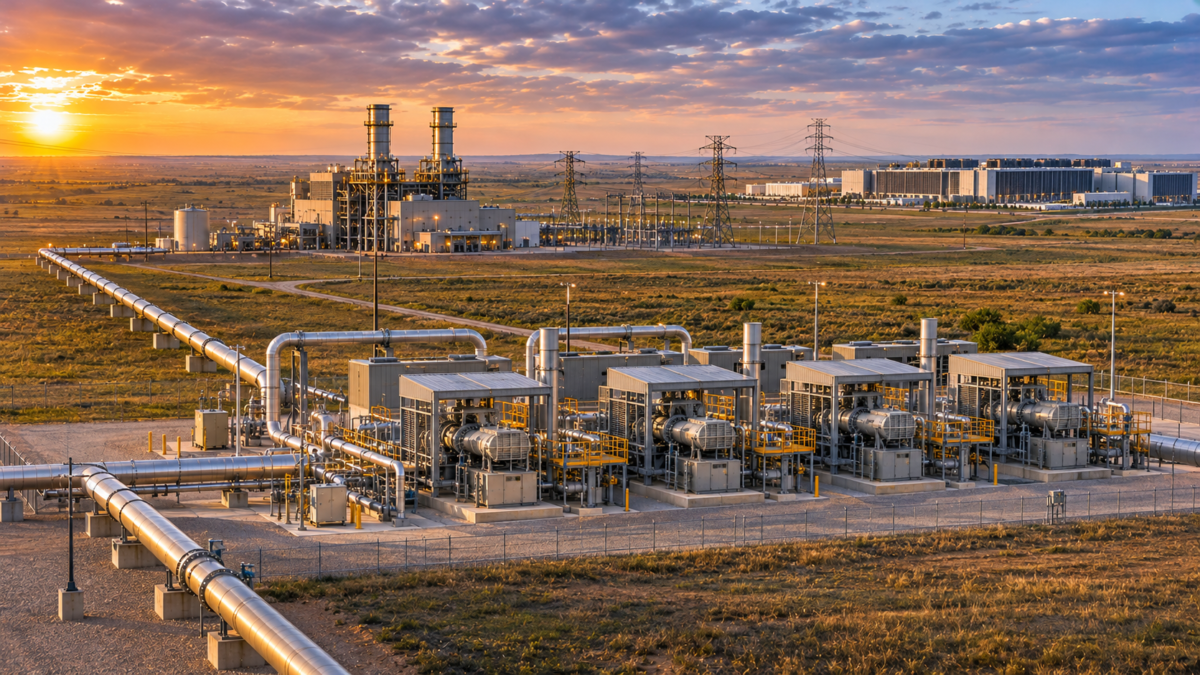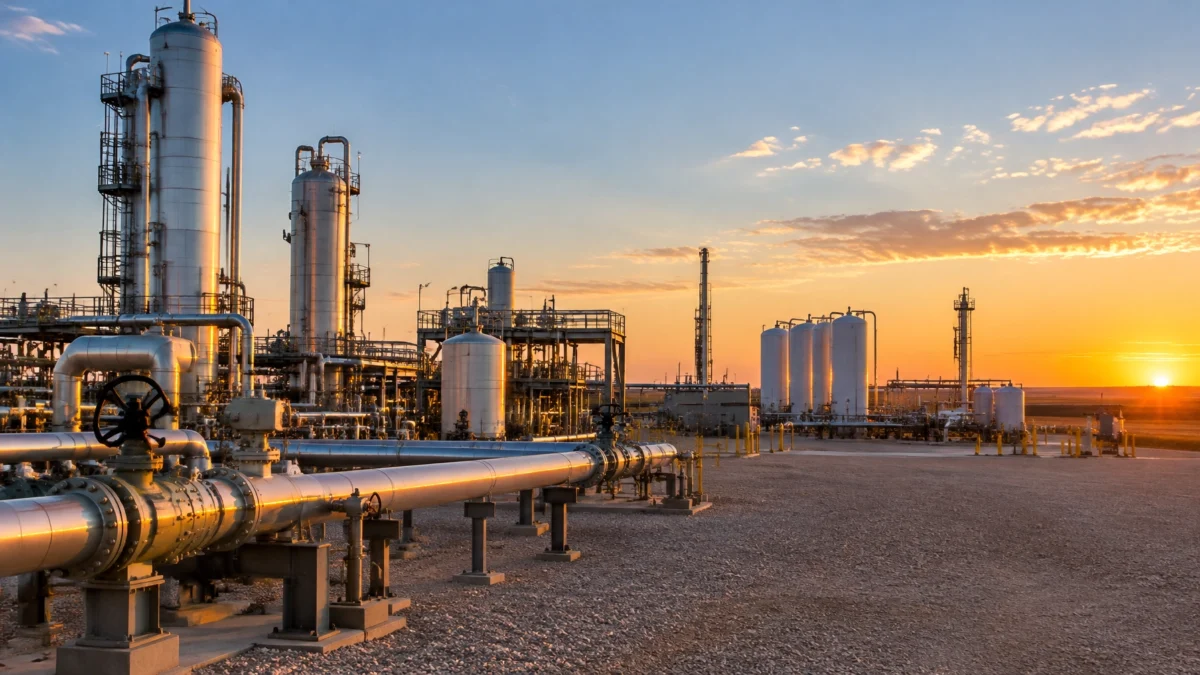

Drilling and Completion Fluids Expert Peter Ogunlusi shares lessons from nearly three decades of complex-well operations, examining how fluid design, wellbore mechanics and disciplined field execution can improve stability and drilling performance.
By Ellen F. Warren

Peter Ogunlusi, a senior manager with one of the world’s largest oilfield services companies, has spent nearly three decades solving drilling and completion fluids challenges across some of the industry’s most demanding operating environments, from deepwater and ultra-deepwater exploration to high-temperature, high-pressure wells and reactive shale and carbonate formations. His work has taken him across Africa, Asia Pacific, South America, Europe and the Middle East, where he has worked with operators including PETRONAS, ConocoPhillips and Mubadala Energy.
Ogunlusi has built his career around the practical relationship between drilling-fluid chemistry, wellbore mechanics and field execution. Among his technical contributions, he led work on a high-temperature-stable water-based mud system used on exploration wells and salt formation in Malaysia and Brazil, and served as a drilling and completion fluids advisor and technical focal point on complex deepwater and development projects. His experience also encompasses cementing, waste management, fluids logistics, wellbore strengthening, solids control and the investigation of unscheduled drilling events.
As a Certified Drilling and Completion Fluids Engineer and member of the Society of Petroleum Engineers, Ogunlusi has increasingly combined technical problem-solving with team leadership and operational management. In this interview, he discusses the engineering decisions behind effective fluids programs, lessons drawn from projects across multiple continents, and the judgment required to translate laboratory performance into reliable results at the wellsite.
ELLEN WARREN: Wellbore instability can emerge even when the drilling fluid appears to be performing within its design parameters. When problems begin developing downhole, what tells you whether the fluid itself is the issue or whether the cause lies elsewhere in the drilling system?
PETER OGUNLUSI: I learned early in my career that a fluid can meet its specifications and the wellbore can still become unstable because stability depends on more than the mud properties measured at surface. Formation behavior, exposure time, pressure history, temperature, hole cleaning, hydraulics and drilling practices all influence what happens downhole, and the interactions among them become especially important in complex wells.
My approach begins with identifying the failure mechanism before changing the fluid. Reactive shale may require stronger inhibition, for example, but stress-related failure, poor hole cleaning, excessive exposure time or pressure fluctuations can produce similar symptoms. The fluid program has to be designed together with the operating practices for the section, with enough flexibility to respond as downhole conditions change. Laboratory performance establishes the starting point. Field data and communication among the mud engineer and drilling team determine how effectively that design performs in the well. Wellbore stability is an outcome, not a mud property.
EW: Water-based muds (WBMs) can become difficult to maintain as temperature, formation reactivity and other downhole stresses increase. What determines whether a water-based system can deliver the stability and performance required for a technically demanding well?
PO: The starting point is understanding which properties are most likely to deteriorate under the conditions expected downhole. Temperature can affect rheology and filtration control, and reactive formations place additional demands on inhibition. Solids accumulation can further change the behavior of the system as drilling progresses, so the formulation has to remain stable under operating conditions rather than simply perform well during initial laboratory testing.
I saw this firsthand while leading technical work on a high-temperature-stable water-based mud for an exploration well in Malaysia. The formulation combined components selected to control rheology and fluid loss, inhibit formation reactivity and maintain performance at elevated temperatures. We evaluated how those functions worked together under the conditions the fluid would encounter in the well, rather than treating each property independently. The system was subsequently used successfully to drill the well.
That experience reinforced the importance of designing around the formation and operating environment instead of relying on a standard formulation. A water-based system can deliver strong performance in demanding wells when the chemistry is selected for the specific failure mechanisms and the properties can be maintained consistently as conditions change.
EW: Laboratory data can reveal a great deal about how a formation may interact with a drilling fluid, but field teams do not always have access to extensive testing. How do you determine which tests provide the most useful information for managing reactive shale?
PO: The testing program should be driven by the decisions the drilling team needs to make. X-ray diffraction helps establish mineral composition, and cation exchange capacity provides an indication of clay reactivity and the potential for interaction with the fluid. Those results can guide the initial inhibition strategy, particularly when selecting and evaluating systems for water-sensitive shale.
At the rig site, simpler tests such as capillary suction time can help assess changes in shale-fluid interaction, although CST results need to be interpreted carefully because test conditions can affect reproducibility. Where additional testing is practical, a Linear Swell Meter can provide another measure of shale hydration or dehydration over time. When laboratory resources are limited, I would prioritize enough mineralogical and reactivity data to understand the formation, then use practical field measurements to determine whether the inhibition strategy continues to perform as expected.
The value of testing comes from connecting the result to an operational decision. More data does not necessarily improve the fluid program if the team cannot translate those results into adjustments in chemistry, fluid maintenance or drilling practices.
EW: High temperatures can change the behavior of a drilling fluid considerably between the surface and downhole environment. Which properties become most critical when you are designing a water-based system for an HTHP well?
PO: Thermal stability has to be considered throughout the formulation because degradation at high temperature can alter rheology, carrying capacity and suspension. In HTHP applications, I have worked with copolymers designed to remain stable at temperatures above 350°F, together with the appropriate concentration of bentonite as the primary viscosifier. The objective is to maintain predictable downhole rheology under both circulating and static conditions.
Stable rheology becomes particularly important for cuttings transport and the suspension of weighting materials. If those properties deteriorate, the system becomes more susceptible to sag, which can create density variations and complicate pressure management. For that reason, thermal testing should evaluate how the complete fluid behaves after sustained temperature exposure, including rheology and suspension, rather than focusing only on whether an individual polymer survives.
For me, the goal is a formulation with enough thermal resilience to remain predictable downhole without adding unnecessary complexity.
EW: A mud system can gradually move away from its intended performance long before a serious drilling problem becomes apparent. What changes do you watch most closely to catch that deterioration early?
PO: I look for trends rather than waiting for a single property to move outside specification. Changes in plastic viscosity, yield point or gel strength can indicate increasing solids or a developing chemical imbalance, and rising filtration may show that fluid-loss control is deteriorating. Shifts in pH, solids content and the physical appearance of the mud can provide additional warning that the active system is changing.
The important part is determining whether those changes are connected. An increase in fine drilled solids, for example, can affect rheology and increase treatment requirements, eventually contributing to poorer hole cleaning and higher torque and drag. By the time stuck pipe, shale swelling or significant wellbore instability occurs, the fluid may have been showing earlier signs of deterioration.
Consistent testing and trend analysis allow the mud engineer to intervene before those changes become operational problems. Effective maintenance depends on understanding what the data is telling you about the system, then correcting the cause before performance deteriorates further.
EW: When an operator considers replacing a synthetic- or oil-based mud with a high-performance water-based system, how do you determine whether the alternative can provide the protection the formation requires?
PO: The decision begins with understanding which characteristics of the existing system are essential for that particular interval. In reactive shale, controlling hydration is important, but pressure transmission into the formation can also destabilize the near-wellbore region. Lubricity, torque and drag, rate of penetration and differential sticking may become important depending on the well design and formation.
A high-performance water-based mud can then be engineered around the functions the well actually requires. One approach I have used is incorporating a micronized deformable sealing polymer to bridge shale micro pores, micro fractures and bedding planes. Creating that barrier helps reduce filtrate and pressure transmission into the formation, which supports wellbore stability without requiring the fluid to reproduce every characteristic of an oil-based system.
The transition should ultimately be judged by downhole performance. Laboratory testing can establish inhibition, sealing and fluid properties, but the system also has to maintain those characteristics under the temperature, pressure, solids loading and operating conditions expected in the well.
EW: Deepwater wells can encounter significant changes in lithology within a single interval. How do you prepare a fluid system for conditions that may differ from what the drilling team expected?
PO: I prefer to design the mud as a flexible platform rather than a formulation optimized for one predicted lithology. Before drilling the interval, we consider the likely range of shale reactivity, salinity, carbonate exposure, permeability, temperature and pressure, then establish an operating envelope that gives the system enough tolerance to handle those variations.
Modular treatment options are important because they allow the engineer to adjust inhibition, filtration control, rheology or lubricity without rebuilding the entire system. The base chemistry also needs sufficient tolerance to changes in salinity, hardness, pH and solids loading. Laboratory testing can help establish that resilience by exposing the fluid to representative combinations of contaminants and lithologies. In these situations, the most useful formulation may be the one that degrades predictably under changing conditions and can be corrected easily, instead of one that delivers exceptional performance under only a narrow set of laboratory conditions.
Once drilling begins, predefined treatment thresholds and trend monitoring provide the field team with a disciplined way to respond. A change in filtration, solids or shale indicators should lead to a specific corrective action that has already been considered, which reduces unnecessary reformulation and reactive treatment.
EW: Mud engineers have traditionally relied on periodic measurements and field experience to recognize changes in an active system. What can real-time analytics and simulation reveal that those methods may not show soon enough?
PO: Real-time analytics can turn the active mud system into a continuously reconciled material balance rather than a series of periodic measurements. By combining pit volumes, flow rates, density, rheology, temperature, dilution, transfers and drilling parameters, the team can identify unexplained volume changes, developing property drift or declining solids-control performance much earlier. Analytics can also help determine when treatment is needed and how much to apply based on what the system is actually doing. The value comes from understanding what is changing and why, so the engineer can make a targeted adjustment instead of responding to another alarm.
Simulation adds another dimension because the team can evaluate a proposed operational change before making it in the well. A hydraulic or mud-system model can estimate how changes in flow rate, mud weight or dilution may affect equivalent circulating density (ECD), annular pressure and cuttings transport. That capability becomes especially useful in wells with narrow pressure margins, where relatively small adjustments can have significant downhole consequences.
I see the greatest potential in combining physics-based models with field data. The physics establishes the operating constraints, and data-driven models can identify patterns specific to the well or operation. The engineer still provides the judgment needed to interpret those results and decide what action makes sense.
EW: Drilling-fluid costs are highly visible during a well, which can create pressure to reduce chemical treatments or choose less expensive formulations. Where have you found the more meaningful opportunities to control cost without compromising wellbore performance?
PO: I look beyond the unit cost of individual additives because some of the largest savings come from reducing the volume of fluid that has to be treated, diluted or discarded. Effective solids control is fundamental. When drilled solids accumulate, rheology and filtration become harder to maintain, dilution increases and additional chemical treatment may be needed simply to compensate for a problem that could have been controlled mechanically.
The fluid itself should therefore be designed with the lowest practical solids loading that still provides the rheology, suspension and hole-cleaning performance required for the well. Inhibition should be matched to the formation, and treatment rates should be adjusted from actual property trends rather than maintained simply because they were specified in the original program.
Fluid recovery can also materially affect overall cost. Recovering usable mud from cuttings and contaminated streams, managing interfaces carefully and reconditioning fluid for reuse between compatible sections or wells can reduce both material consumption and waste volumes.
My priority is to optimize solids control, dilution, treatment and recovery before focusing on the price of an individual additive. Cost control should come from eliminating unnecessary material circulation and waste, not from weakening the fluid until the wellbore tells you.
EW: After working in very different geological and operating environments, which principles have proven dependable when you begin designing a fluids program for a complex well?
PO: I start with the well objective because the fluid has to support what the drilling and completion program is trying to accomplish. From there, I want to understand the formation, pore-pressure and fracture-gradient environment, temperature, mineralogy, permeability, expected contaminants and the operational risks associated with each interval. Those factors establish the boundaries within which the fluid has to perform.
The next step is to consider the fluid as part of the complete well system. Rheology affects hydraulics and hole cleaning; solids influence rheology and ECD; inhibition affects cuttings integrity and solids-control efficiency; filtration and pressure transmission can influence wellbore stability. Fluid performance can also affect formation protection, cementing and completion, so optimizing one property in isolation can create problems elsewhere.
Pressure management deserves particular attention in narrow-margin wells. The objective extends beyond achieving a specified mud weight to controlling the pressure profile under both static and circulating conditions, including ECD and surge-and-swab effects, within the pore-pressure and fracture-pressure window.
Laboratory testing establishes whether the proposed chemistry can tolerate expected conditions, but the design also needs enough robustness for field variability. Once drilling begins, actual well response and property trends provide the feedback needed to adjust the program intelligently.
The principle I keep coming back to is to understand the physical constraints of the well, identify the failure mechanisms that matter, and build enough performance margin and operational flexibility into the fluid system to manage them throughout the well.
EW: Brazil’s deep-water pre-salt developments have required operators to manage technically complex wells at increasing scale. Which lessons from that experience are most relevant to Gulf Coast and U.S. shale operations?
PO: One important lesson is that cost efficiency and well integrity can be pursued together when engineering decisions are evaluated over the life of the well. Large drilling campaigns create opportunities to standardize proven designs, procedures and operating practices, then concentrate additional engineering effort on the geological or operational uncertainties that differ from well to well.
For U.S. shale, I would reduce that to a simple rule: spend heavily on preventing irreversible integrity failures, and spend very little on complexity that does not measurably reduce that risk.
Standardized casing and liner designs, robust cementing practices and barrier verification can be combined with real-time data and post-well learning to improve performance across a drilling program. The objective should not be developing the cheapest individual well, but the lowest sustainable lifecycle cost across the program.
Deepwater operations require particular discipline because the consequences of losing operating margin can be much greater. Casing, cementing, drilling fluids, pressure control and completion requirements have to function as an integrated barrier system, with diagnostics helping the team distinguish problems that require intervention from conditions that do not.
Brazil’s broader achievement was learning how to make increasingly complex wells behave more like a repeatable industrial process. Standardize what experience has proven, focus engineering effort on the remaining uncertainty, and preserve the barriers that protect the well throughout its life.
EW: You have led and developed drilling-fluids teams across different countries, operating environments and levels of experience. What have those leadership responsibilities taught you about developing engineers who can exercise sound technical judgment and earn the trust of the teams around them?
PO: Strong technical fundamentals are essential. An engineer needs to understand drilling hydraulics, wellbore stability, fluid behavior, pressure management and operational risk well enough to make decisions when conditions do not follow the plan. But experience has taught me that technical knowledge alone does not make someone a technical leader.
I encourage younger engineers to learn from the people around them. Read technical papers, ask experienced colleagues why they make certain decisions, and study previous incidents closely enough to understand what happened and how a recurrence could have been prevented. You also have to be willing to say when you do not know something. I have worked with engineers and field personnel from different countries, disciplines and generations, and every one of them can bring a perspective you may not have considered. Sometimes the person with decades of field experience teaches you something; sometimes a younger engineer asks the question that changes how you see the problem.
Breadth matters as well. Understanding how drilling fluids interact with completions, subsurface, HSE, supply chain and operations helps an engineer see the whole well and recognize the consequences of a decision beyond his or her immediate responsibility. Working internationally also taught me to listen carefully and communicate technical concerns in ways that people from different backgrounds can understand.
Leadership begins before anyone gives you the title. Take ownership when a problem develops, share what you know, help less-experienced colleagues and create an environment where people are comfortable raising concerns. The strongest technical leaders I have known never stopped learning from the people around them, and I have tried to carry that principle throughout my own career.
This article was submitted by a guest contributor and reflects the author’s professional experience, analysis, and opinions. It was reviewed by ENMG for editorial quality, accuracy, and adherence to our publication standards. Any affiliations, disclosures, or potential conflicts of interest identified by the author are noted within the article where applicable.
Keep In Touch with Shale Magazine
As the new era of energy unfolds, you can bet we’ll be the boots on the ground to keep you informed. Subscribe to Shale Magazine for sharp insight into the arenas that matter most to your life. And don’t forget to listen to our riveting podcast, The Energy Mixx Radio Show, where our very own Kym Bolado interviews the most extraordinary thought leaders, business innovators, and industry experts of our time.