The United States has conducted several international operations this year, including attacks on Iran and an intervention in Venezuela, as well as threatened a potential takeover of Greenland. The Trump administration has defended these moves as part of the country’s efforts to maintain a peaceful world order and ensure the security of the United States.
However, several world leaders and international organizations have accused the U.S. president of acting outside international law by infringing on other countries’ sovereignty without legal cause or broad international support.
A country’s sovereignty is based on the exclusive power that it exercises over its territory and its nationals. The principle of sovereignty regulates interstate relations, promoting peaceful coexistence. It is enshrined in the UN Charter, which states that the organization is based on the “sovereign equality” of all Member States, implying that all countries must respect the prerogatives of other countries in their policies over their own populations and territories.
The Iran War, Middle East Conflict, and Global Energy Crisis
On February 28, the United States and Israel conducted a joint operation, launching strikes on Iran, in which Iran’s Supreme Leader Ali Hosseini Khamenei was killed. Israeli Ambassador to the United Nations (UN) Danny Danon cited an “existential threat to Israel” as the reason for the strikes. The Trump administration said the operation was intended to eliminate Iran’s nuclear threat and degrade its missile, naval, and proxy capabilities.
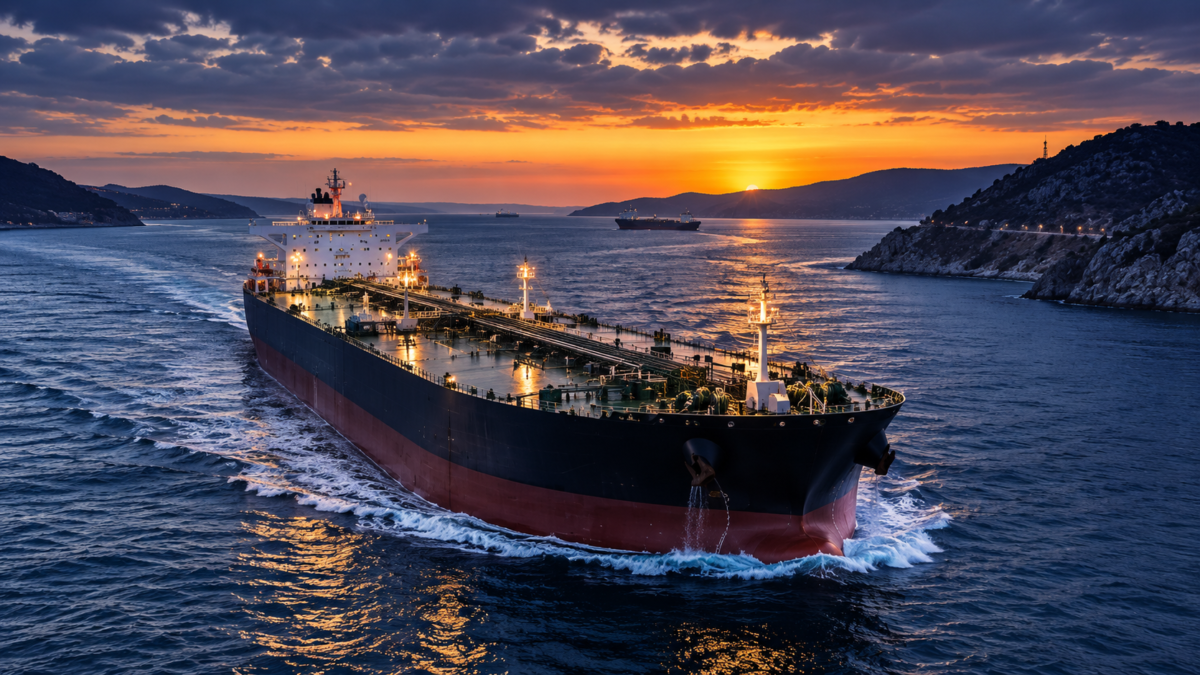
Iran subsequently launched retaliatory strikes on Israel and several Gulf States, and announced the closure of the Strait of Hormuz, a key trade corridor connecting Asia and Europe.
At the time, the UN Secretary-General, António Guterres, condemned the military escalation, warning that international peace and security were being undermined. Meanwhile, in a joint statement, the leaders of France, the United Kingdom, and Germany called for peace and emphasized that they had not participated in the strikes.
In the months following the initial strikes, several attacks have been carried out by both sides while talks for a ceasefire continue. Meanwhile, trade through the Strait of Hormuz remains constrained, driving up oil and gas prices and contributing to a global energy crisis.
In August, Iran criticized the United States for ‘extraterritorial sovereignty’ following Trump’s announcement that the U.S. will introduce strict new sanctions on Iran.
Iranian Foreign Ministry spokesman Esmaeil Baqaei said in a post on X on August 21, “The United States’ declaration of new economic sanctions on Iran is far more than continued unlawful ‘economic warfare’ against a single country. It is an assertion of extraterritorial sovereignty over every independent Member State of the United Nations.”
This followed comments by President Trump saying that the United States will launch what he called the “most crushing economic operation ever taken against any country” against Iran. Trump went on to threaten severe financial penalties on any country that helps Tehran evade sanctions, adding that “This will be Economic Warfare and Isolation on an unprecedented scale.”
On August 21, Trump also stated that he viewed the Strait of Hormuz as “an American territory”. Addressing a crowd in South Carolina, the president said, “We don’t even know if we won, because I view the Strait of Hormuz as an American territory right now.”
Trump had previously threatened to declare the Strait a U.S. territory, saying “Essentially, that’s what it is. We have the blockade. No ships get through unless we want them to,” during a speech at a New York police academy. Iran’s deputy foreign minister, Kazem Gharibabadi, later rejected Trump’s comments, referring to them as “delusions”.
Intervention in Venezuela
This is not the first time President Trump has been accused of overstepping his role in international affairs. On January 3, President Trump conducted a unilateral military operation in Venezuela in which President Nicolás Maduro was captured and transported to the United States, charged with crimes related to a “narco-terrorism” conspiracy.
On January 7, a group of UN-appointed independent experts condemned the intervention. The UN released a statement from several UN representatives saying, “These actions represent a grave, manifest and deliberate violation of the most fundamental principles of international law, set a dangerous precedent, and risk destabilizing the entire region and the world.”
The International Federation for Human Rights said the attacks “constitute an aggression against the sovereignty of peoples, regional peace, and respect for international law.” Meanwhile, Stanford Law lecturer Allen Weiner stated, “This is simply, under international law standards, a use of force by the United States against Venezuela which is categorically prohibited” under UN international law.
Threats to Greenland
President Trump has repeatedly called for Greenland to come under U.S. control, drawing accusations that his position threatens the territory’s sovereignty. During a July NATO summit in Ankara, Turkey, Trump said that Greenland “should be controlled by the United States, not by Denmark.” This was viewed as a move to double down on his campaign to annex the semi-autonomous Danish territory.
In January, following earlier threats by Trump to take over Greenland, European Commission President Ursula von der Leyen said in a speech that the EU stood in “full solidarity” with Greenland and the Kingdom of Denmark, adding that their sovereignty was “non-negotiable”.
Meanwhile, Greenland’s Minister of Industry and Natural Resources, Naaja Nathanielsen, told the BBC that Greenlanders were “bewildered” by President Trump’s demands. Nathanielsen stated, “We do not want to be Americans, and we have been quite clear about that.”
President Trump has pursued actions and positions involving Iran, Venezuela, and Greenland that critics say challenge long-standing concepts of national sovereignty. Although international institutions and governments have limited means to directly prevent unilateral action by a major power, several of Trump’s decisions have drawn widespread diplomatic and legal criticism.