

Digital technologies have expanded what operators can see, predict, and optimize, but sustaining value depends as much on organizational adoption as technological capability. In this interview, Vikas Agrawal discusses digital transformation, enterprise adoption, value realization, and how artificial intelligence is helping connect reservoir intelligence with operational decision-making.
A SHALE Exclusive by Ellen F. Warren
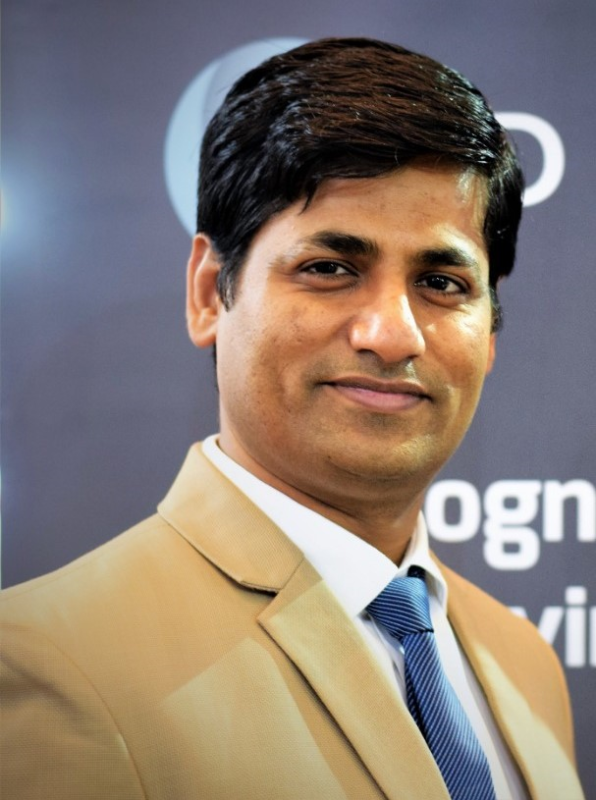
Vikas Agrawal is an Integration Manager responsible for leading the integration of people, technologies, and business operations following a major technology acquisition within the energy industry. Over nearly 25 years in the oil and gas sector, he has held technical, operational, commercial, and executive leadership roles spanning North America, Europe, Africa, the Middle East, and Asia. His career has followed the industry’s evolution from traditional production engineering and reservoir management to today’s increasingly connected, data-driven operating environments.
Before moving into global commercial and digital leadership positions, Vikas built his foundation in reservoir engineering, production optimization, integrated digital solutions, and field-development support. Those experiences brought him into close collaboration with operators across a wide range of asset types, organizational structures, and levels of digital maturity, helping them improve operational performance while navigating the complexities of technology adoption and large-scale organizational change.
Experience spanning petroleum engineering, innovation, and operational performance has given Vikas a practical perspective on digital transformation that emphasizes enterprise adoption, value realization, and long-term operational impact. In this interview, he discusses lessons learned from two decades of digital-oilfield evolution, including the factors that influence long-term value realization, the challenges of scaling successful initiatives across the enterprise, and the role that governance, accountability, and artificial intelligence are playing in the next phase of digital operations.
ELLEN WARREN: You began your career in reservoir and production engineering before moving into global leadership roles focused on digital solutions. What experiences during those early technical years most influenced the way you think about digital transformation today?
VIKAS AGRAWAL: Early in my career, I had the opportunity to work across several core petroleum-engineering disciplines, including reservoir, production, and drilling engineering. Those experiences allowed me to build on the theoretical foundation I developed in college while gaining firsthand exposure to how oilfield operations function in practice.
As my career progressed, I became involved with technologies deployed at the well level, where the impact of operational decisions and digital insights could often be measured very quickly. I also worked on initiatives such as asset-wide production optimization and field-development planning, which provided a broader perspective on how different technical and operational groups contribute to overall business performance.
Those experiences continue to shape the way I think about digital transformation. Successful initiatives require more than technology. They need a clear understanding of the business outcome being pursued, a phased approach to implementation, and alignment among stakeholders regarding the value the initiative is expected to deliver. When those elements are in place, organizations are far more likely to achieve meaningful and sustainable results.
EW: Over the past two decades, digital oilfield technologies have evolved dramatically. Which changes have had the greatest impact on how operators manage production performance and make operational decisions?
VA: In my view, the biggest advances have come in three areas: data management, artificial intelligence, and communication infrastructure. The industry has had first-principles-based software capable of generating valuable operational insights for many years. The challenge was often getting the right data to the right people quickly enough to support timely decision-making.
In many cases, by the time data was collected, analyzed, and communicated to field personnel, operating conditions had already changed and much of the potential value had been lost. Today, on-demand access to operational data, AI-driven insights, and faster communication systems allow decisions to be made and acted upon within the required operational timeframe. As a result, operators can respond more quickly and achieve greater impact from those decisions.
EW: Successful pilot projects often demonstrate what a digital solution is capable of achieving. At what point do organizations begin shifting their attention from proving the technology to building the organizational foundation needed to sustain it across the enterprise?
VA: This is a great question and something that I have experienced firsthand on multiple projects. Several factors determine whether a digital solution can sustain and expand across an enterprise, but three considerations consistently stand out: realistic expectations regarding value and timing, buy-in from all key stakeholders, and a plan to integrate the solution into existing business processes and ways of working.
Teams often focus on what a technology can or cannot do, or on achieving a few early wins. Those things are important, but long-term success depends on having a clear roadmap that stakeholders support and a willingness across the organization to adopt the changes that come with the new solution.
EW: You’ve suggested that long-term success depends as much on the organization as the technology. How do governance, ownership, and operating models influence whether digital investments continue creating value after deployment?
VA: They are extremely important and, in some cases, more important than the technology itself. Technology is obviously essential because there is no digital transformation without it. However, a solution with fewer features but stronger stakeholder ownership, greater user adoption, and better integration into existing workflows will often deliver more sustainable results than a technically superior solution that lacks those elements.
Defining the operating model early is equally important. I’ve found that it’s much easier to establish clear expectations, roles, and accountability at the beginning than to introduce them later. I’ve also found that adoption becomes much easier when people understand how the solution will be governed, who owns key decisions, and what their role is in making it successful.
EW: You have worked with operators across different regions, asset types, and levels of digital maturity. What organizational characteristics do you most often see in companies that sustain value from digital investments, and what factors make it difficult for some organizations to move beyond successful pilot programs?
VA: In my experience, organizations that sustain value from digital investments recognize very early that successful adoption requires more than selecting the right technology. They establish clear ownership for the initiative, define how decisions will be made, integrate new capabilities into existing operational workflows, agree on how success will be measured, and ensure those governance processes continue supporting the organization as digital adoption grows. The specific organizational structure may differ from one company to another, but those underlying questions need to be answered if digital initiatives are going to become part of normal operations.
Organizations that struggle to move beyond successful pilot projects often face a different challenge. The technology may perform exactly as intended, but ownership is unclear, operational processes remain unchanged, or people are unsure how new insights fit into their day-to-day responsibilities. In those situations, pilot projects demonstrate what the technology can do, but the organization never fully develops the operating model needed to sustain and expand its value.
EW: Digital platforms are capable of generating large volumes of operational insight. What practices help organizations translate those insights into decisions and actions that improve performance?
VA: In short, it’s all about operationalizing the insights. Today’s digital technologies can generate an enormous volume of information, sometimes to the point where organizations experience insight fatigue. Too many alerts, false alarms, or irrelevant recommendations can reduce trust and make it harder for people to identify what truly matters.
For insights to drive meaningful action, they must be relevant, contextual, and delivered to the right people at the right time. In my opinion, three things are particularly important: embedding digital platforms into day-to-day operational workflows, demonstrating value so users develop confidence in the insights being generated, and establishing an operating model that minimizes the gap between insight and execution. Digital technologies have done a good job of making operational data more accessible, but without those enablers, organizations risk replacing data silos with a growing backlog of unused insights.
EW: Artificial intelligence is becoming an increasingly important part of digital operations. Where do you see the greatest opportunity for AI to support production optimization and operational decision-making?
VA: The opportunities are broad, but if I had to highlight one area, it would be integrating reservoir intelligence more directly into operational decision-making, particularly in mature producing fields.
Traditionally, subsurface modeling and surface optimization have been treated as separate activities, with reservoir management focused on longer-term strategy and production operations focused on shorter-term execution. That separation can create a gap between how the reservoir is expected to behave and the operational decisions made in response to those conditions. By the time a decision is implemented, reservoir conditions may already have changed.
AI creates an opportunity to connect those disciplines more closely. By continuously incorporating new data and updating predictions, AI can help operators better align production decisions with actual reservoir behavior. The ability to bring reservoir intelligence into the operational timeframe represents one of the most significant opportunities for production optimization over the next several years.
EW: As your career has expanded from technical engineering into operational, commercial, and digital leadership, what have you learned about leading successful digital transformation initiatives?
VA: Earlier in my career, I naturally focused on the technology itself. I wanted to help teams understand what a solution could do and how it could improve operational performance. Those technical fundamentals remain important, but I’ve come to appreciate that successful transformation depends just as much on helping people understand why a change matters, how it fits into their daily work, and what success looks like.
That realization has also changed the way I lead teams. Today, much of my attention is devoted to building alignment around business objectives, defining clear expectations, and making sure the right people are involved from the beginning. Technology implementation is only one part of the process. Long-term success comes from creating an environment where people understand their role, trust the technology, and have the confidence to incorporate it into the way they work every day.
EW: Your career has encompassed technical, operational, commercial, and digital leadership roles. What leadership principles have guided you in helping organizations navigate technological change while maintaining focus on long-term business value?
VA: One principle has guided me throughout my career: always begin with the business problem you’re trying to solve. Technology initiatives are most successful when everyone shares a clear understanding of the outcome the organization is trying to achieve. Technology should support that objective, not define it.
From there, the focus shifts to adoption. A solution needs to become part of the operating model and the way people work every day. I encourage teams to establish that foundation early, begin learning from implementation, and refine their approach as experience accumulates. Waiting for the perfect solution often delays the opportunity to create value.
I’ve also found that it’s important to think beyond the immediate deployment. Technologies, business priorities, and operating environments will continue to change, so organizations need solutions that can adapt alongside them. Long-term value comes from building solutions that people can continue using, improving, and expanding as the business scales.
EW: You’ve worked with operators at different stages of digital maturity throughout your career. If you walked into an organization beginning a major digital transformation today, what questions would you want its leadership team asking before the technology is ever deployed?
VA: Before selecting a technology, I’d encourage leadership teams to ask a different set of questions. Who will ultimately own the outcome? How will decisions be made once new insights become available? How will those decisions fit into existing operational workflows? What will success look like, and how will it be measured over time? Finally, how will the organization ensure that governance keeps pace as adoption expands?
No two organizations will answer those questions in exactly the same way. What matters is that leadership addresses them before implementation begins. In my experience, those early conversations create much stronger alignment across technical, operational, and business teams. Technology continues to advance rapidly, and successful digital transformation still depends on people understanding their roles, taking ownership, and working toward shared business objectives. When that foundation is in place, organizations are far better positioned to translate digital investments into lasting operational value.
Guest Contributor Note
This article was submitted by a guest contributor and reflects the author’s professional experience, analysis, and opinions. It was reviewed by ENMG for editorial quality, accuracy, and adherence to our publication standards. Any affiliations, disclosures, or potential conflicts of interest identified by the author are noted within the article where applicable.

About the Author:
Ellen F. Warren writes about industry leaders and trends in various sectors, including energy, fintech, IT innovation, healthcare, business, logistics, supply chain, commercial real estate, and entrepreneurship. As a former Independent Director, she served for more than a decade on the Boards of multiple E&P companies in the oil and gas industry.
Keep In Touch with Shale Magazine
As the new era of energy unfolds, you can bet we’ll be the boots on the ground to keep you informed. Subscribe to Shale Magazine for sharp insight into the arenas that matter most to your life. And don’t forget to listen to our riveting podcast, The Energy Mixx Radio Show, where our very own Kym Bolado interviews the most extraordinary thought leaders, business innovators, and industry experts of our time.