ENMG Analysis
The U.S. Department of Energy has awarded a five-year contract valued at up to $49.8 million to advance methane-hydrate research and potentially conduct another production test on Alaska’s North Slope. The award supports continued field work at a Prudhoe Bay Unit research site, but the project’s second phase is an option, not a guaranteed production campaign, and commercial viability remains unproven.
The award to ASRC Consulting and Environmental Services, LLC (ACES), a subsidiary of Arctic Slope Regional Corporation Energy Services Alaska, Inc. (AES), is intended to move the research toward a test of whether methane can be produced from hydrate-bearing formations at commercially relevant rates. The funding figure is the contract’s stated maximum value; it should not be read as $49.8 million already spent or as authorization for Phase 2. As the department announced, Phase 1 covers maintenance of the existing site and equipment, plus detailed planning for a possible follow-on test. DOE would need to exercise its option before Phase 2 proceeds.
That distinction matters. The announcement is a commitment to research and planning, not evidence that hydrate gas is ready to enter the U.S. supply system. The work’s central question is whether a difficult subsurface resource can be produced reliably, with manageable operational and environmental risks.
Why Methane Hydrates Are Difficult To Produce
Methane hydrates are naturally occurring solids in which methane molecules are held within a crystalline lattice of water molecules. They form under low-temperature and elevated-pressure conditions, including beneath Arctic permafrost and in deep-ocean sediments. If the surrounding formation warms or pressure falls enough to move outside the hydrate’s stability range, the lattice dissociates and releases methane and water.
That process is the basis of production, but controlling it underground is technically challenging. Researchers can try to dissociate hydrates by lowering reservoir pressure, applying heat, or injecting chemical inhibitors. Each method must contend with the behavior of the surrounding formation as gas and water move through it. Sand can enter the well and damage equipment; water must be handled; and changes in pressure and temperature can affect wellbore stability and the strength of the reservoir.
Japan’s offshore tests illustrate the gap between producing gas and producing it predictably over time. Its 2013 test produced gas for six days before ending early because of sand production. A 2017 campaign achieved 36 cumulative flow days across two wells, but intermittent sand production, rough weather, and flow-assurance problems remained operational challenges, according to Japan’s methane-hydrate research program. These were research tests, not commercial operations.

The resource estimates also require careful interpretation. Hydrate deposits are often described as enormous, but the amount of methane present in formations is not the same as the amount that can be recovered economically or safely. A U.S. Geological Survey assessment estimated a mean of about 53.8 trillion cubic feet of undiscovered technically recoverable gas in Alaska’s North Slope hydrate accumulations. That is a modeled estimate, not a proved reserve, a production forecast, or a demonstration of commercial economics. The gap between resource estimates and dependable production is precisely what field tests are intended to examine.
Why The Prudhoe Bay Site Matters
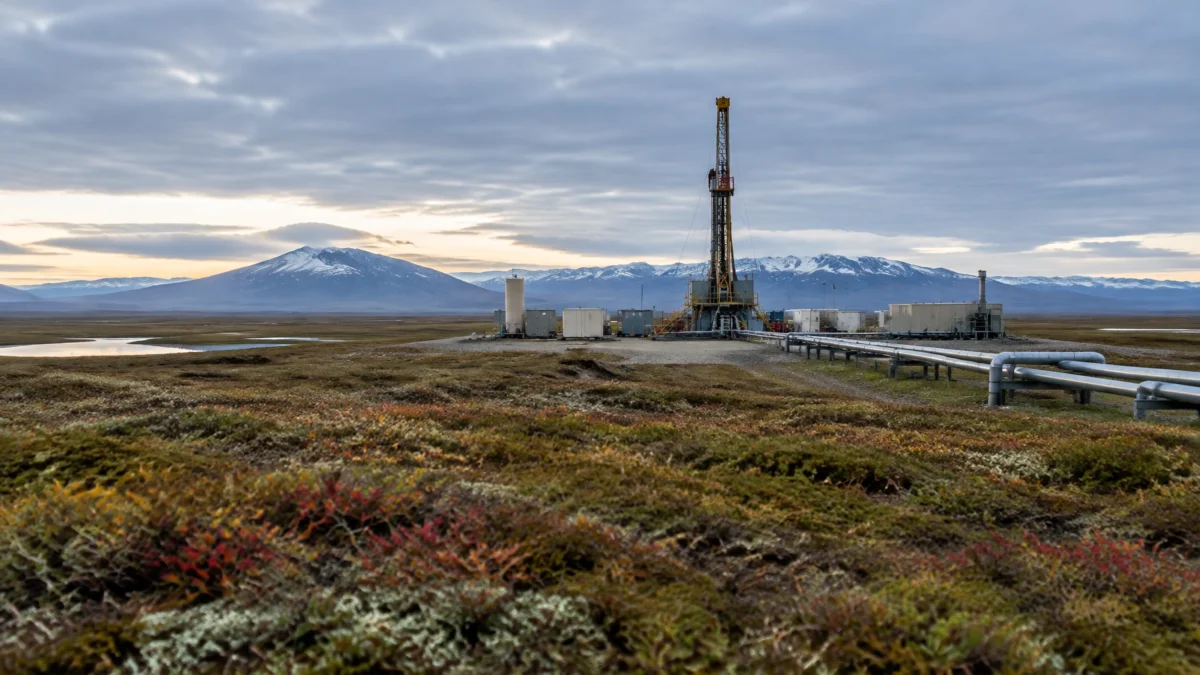
DOE says the North Slope site offers a setting for long-duration research, with established infrastructure and continuously monitored wells. Those features can help researchers collect data over time and support follow-on operations without starting from a new location. The research also sits within a broader discussion about North Slope energy infrastructure and the pipelines, roads, and utility corridors needed to connect Arctic resources with consumers. DOE previously conducted production testing at the site from September 2023 through July 2024, generating information on longer-term reservoir behavior and environmental considerations.
The organizational and permitting arrangements are also part of the project’s practical foundation. ACES is a subsidiary of AES, which is part of Arctic Slope Regional Corporation, an Alaska Native corporation. The field testing operates under a drilling agreement between AES and Hilcorp Alaska, acting on behalf of the Prudhoe Bay Working Interest Owners, approved by the Alaska Department of Natural Resources. DOE says the new work will continue in collaboration with the U.S. Geological Survey and AES, as well as Japan’s Organization for Metals and Energy Security (JOGMEC) and Ministry of Economy, Trade and Industry (METI).
The Japanese partnership brings a long-running research interest to the project. Japan relies heavily on imported energy resource and has investigated hydrate deposits in its offshore waters as a possible domestic resource. Collaboration can share technical experience and research costs, but it does not resolve the production or commercial questions on either side of the Pacific.

If DOE exercises the Phase 2 option, ACES would establish and operate temporary production facilities to test targeted hydrate-bearing sections. The goal would be to assess whether the formations can sustain rates that could be relevant to commercial production. No Phase 2 production-rate data exists yet, and the announcement does not provide a schedule, a production target, or evidence that a commercial project would follow.
What The Test Can And Cannot Establish
A successful test could improve understanding of reservoir response, well design, sand control, water handling, and the consistency of gas flow. Those findings could help companies and policymakers assess whether hydrates merit additional research or eventual development. For North Slope stakeholders, the work also creates a pathway for continued participation by an Alaska Native corporation and local industry partners. DOE has not announced specific job numbers or local economic benefits, so those outcomes should not be assumed.
The limitations are substantial. Even if a test produces gas at a high rate for a period of time, that alone would not prove that production can continue economically over a field’s life. Commercial development would also depend on well costs, infrastructure needs, operating conditions, permitting, gas prices, and environmental performance. A potential source of future natural gas would have to compete with established supplies from conventional production and other energy options.
Environmental monitoring is central to that assessment. Production testing must determine whether methane migrates outside intended flow paths through the formation or well system and whether such migration can be detected and controlled. Permafrost thaw can also alter the temperature and pressure conditions that affect hydrate stability, making it relevant both to resource assessment and emissions accounting. The scale, pathways, and atmospheric effects of methane release are site-specific and uncertain; the USGS review of gas hydrates and the environment describes these as questions requiring careful study, not settled outcomes.

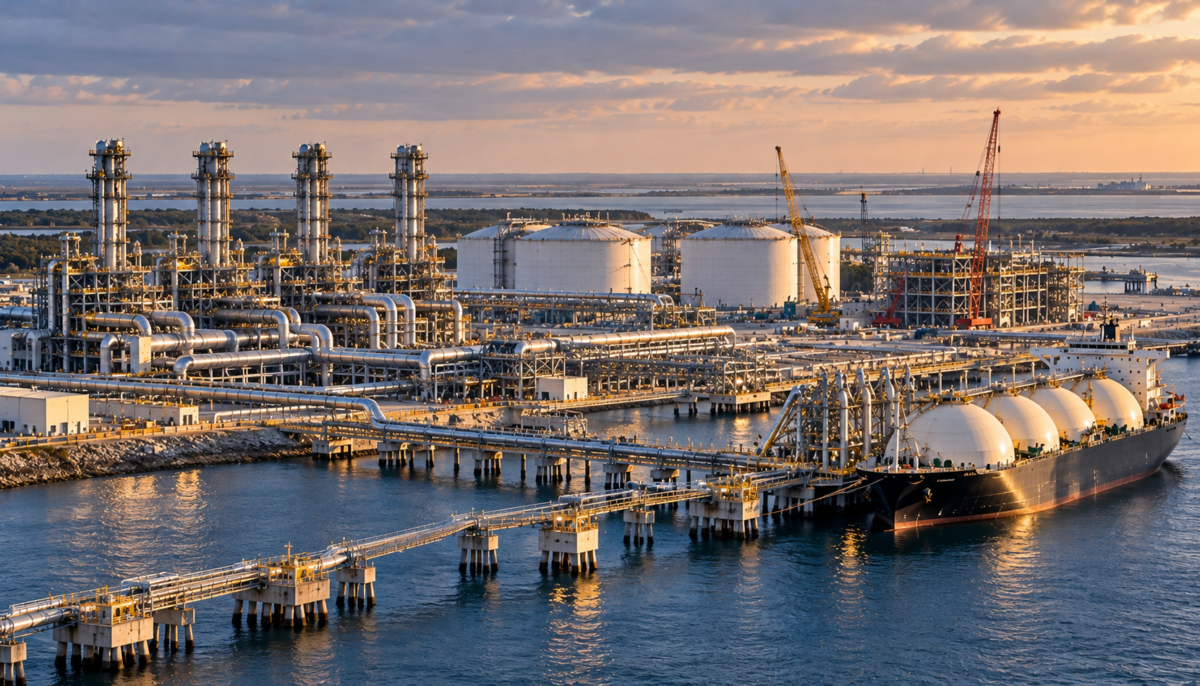
For the broader energy system, methane hydrates remain a long-term research prospect rather than a near-term answer to the energy-deliverability challenges affecting pipelines, LNG, storage, transportation, and electricity markets. Even commercially producible gas would be one part of a system shaped by conventional natural gas, pipelines, LNG, storage, electricity demand, and competing fuels. The DOE award funds an effort to narrow a technical uncertainty; it does not establish how hydrate gas would affect prices, exports, or energy security.
The next milestones are therefore more important than the contract headline alone: whether the existing site and equipment are maintained as planned, what the Phase 2 test design and monitoring program include, whether DOE exercises its option, and what the field data show about sustained gas rates, water production, sand control, and methane containment. Until those results are available, the $49.8 million award is best understood as a research investment in determining whether a vast estimated resource can become a technically and economically credible supply.
Keep In Touch with Shale Magazine
As the new era of energy unfolds, you can bet we’ll be the boots on the ground to keep you informed. Subscribe to Shale Magazine for sharp insight into the arenas that matter most to your life. And don’t forget to listen to our riveting podcast, The Energy Mixx Radio Show, where our very own Kym Bolado interviews the most extraordinary thought leaders, business innovators, and industry experts of our time.