U.S. Geothermal Energy Advances as Cape Station Begins Commercial Operation
The United States is powering ahead in geothermal energy thanks to high levels of federal and private funding for a wide range of projects, as well as broad political support. The Trump administration has continued to support geothermal energy through federal policy and funding, building on initiatives launched under the Biden administration.
What Is Geothermal Energy?
Geothermal energy is produced by drilling into underground heat pockets in the Earth’s surface to access heat. The Earth’s core is around 5,200 degrees Celsius (°C), while rock and water in the Earth’s crust can reach temperatures of around 370°C. Energy companies can access thermal energy and warm water deposits in rocks by drilling reservoirs just a few miles deep, using this heat to drive turbines to produce carbon-free electricity.
There are a variety of geothermal energy systems, from direct-use to district-heating systems, geothermal power plants, and geothermal heat pumps, which use either the Earth’s high temperatures near the surface or drill miles deep to access higher temperatures. Geothermal energy can be used for heating or cooling, as well as to generate clean electricity from high- or medium-temperature resources in tectonically active regions worldwide.
In 2025, the United States accounted for 23% of installed global geothermal capacity and led in operating capacity, with 3.7 GW. However, in 2025, geothermal power plants produced just 0.4% of total U.S. utility-scale electricity generation. California is home to 53 of the country’s 99 geothermal power plants, while Nevada hosts 32, Oregon and Utah each have 4, Hawaii and Alaska each have 2, and Idaho and New Mexico each have 1.
Trump Administration Geothermal Drive
Since taking office in January 2025, President Trump has often voiced opposition to a wide range of renewable energy sources, such as wind and solar power, while championing fossil fuels, including oil, gas, and coal. This stance has been reflected in the wide range of executive orders focused on energy and changes in policy over the last year and a half.
However, the Trump administration has shown support for geothermal energy, both through policy and funding. The U.S. Secretary of Energy, Chris Wright, signed his first Secretarial Order in early February 2025 entitled “Unleash [the] Golden Era of American Energy Dominance”, in which he explicitly supports the use of geothermal energy for heating.
In addition, advances in enhanced geothermal systems have improved the economics and expanded the potential geographic reach of geothermal development. Bipartisan support for geothermal energy, technological advancements, and increased public and private investments have helped drive sectoral growth, with further advances expected over the coming decade.
U.S. Geothermal Energy Potential
Thanks to broad public and private support for the energy source, 1.16 gigawatts (GW) of geothermal energy are now expected to come online by 2028, according to Global Energy Monitor’s Global Geothermal Power Tracker. This would represent a meaningful expansion of the U.S. geothermal sector.
The U.S. Department of Energy (DoE) aims to reach 5 GW of geothermal energy capacity by the end of the decade as part of its Liftoff program, and 90 GW by mid-century. The DoE is also aiming to reduce the cost of geothermal power per megawatt-hour by 90% by 2035, as part of its Enhanced Geothermal Shot initiative.
Federal Funding and Commercial Progress
On September 3rd, the DoE established the new Geothermal Center of Excellence at the National Laboratory of the Rockies in Colorado, which will lead research on geothermal energy alongside the DoE’s National Energy Technology Laboratory.
The DoE said in a statement, “The Center will unite expertise and world-class capabilities from across DOE’s National Laboratories to accelerate the discovery and development of gigawatt-scale geothermal energy, resource discovery, and commercial development.”
Later in September, the DoE announced that it had selected 21 projects for up to $99 million in funding (subject to award negotiations) to advance geothermal energy development. Recipients include the geothermal startup Fervo Energy, which was selected for two projects: an enhanced geothermal systems demonstration in Idaho and exploration drilling in Nevada. Fervo, which was founded in 2017, has also secured $10 million from Liberty Energy in 2022 and an additional $462 million in Series E funding in 2025.
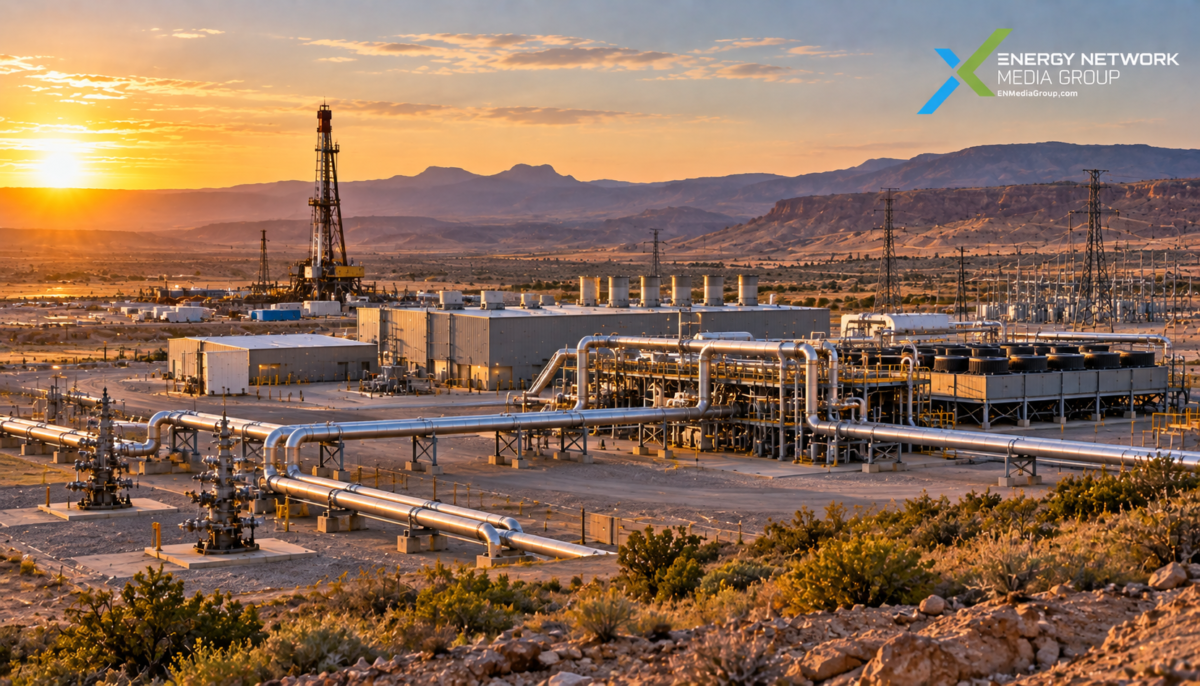
Fervo has been developing a geothermal energy project in Utah and is expected to become the first EGS in the U.S. to reach commercial operation. The EGS technology it is using is the same drilling and hydraulic fracturing techniques developed by the oil and gas industry. Its Cape Station project in Milford, on which Fervo began development in 2023, is now connected to the grid and is expected to become the first EGS in the U.S. to reach commercial operation.
Geothermal remains a small part of the U.S. power mix, but it now has something it lacked for much of its history: technologies that could dramatically expand where it can be developed. If projects such as Fervo’s Cape Station demonstrate that enhanced geothermal systems can operate reliably and economically at commercial scale, geothermal could become a much more important source of round-the-clock power as U.S. electricity demand grows.
Keep In Touch with Shale Magazine
As the new era of energy unfolds, you can bet we’ll be the boots on the ground to keep you informed. Subscribe to Shale Magazine for sharp insight into the arenas that matter most to your life. And don’t forget to listen to our riveting podcast, The Energy Mixx Radio Show, where our very own Kym Bolado interviews the most extraordinary thought leaders, business innovators, and industry experts of our time.