
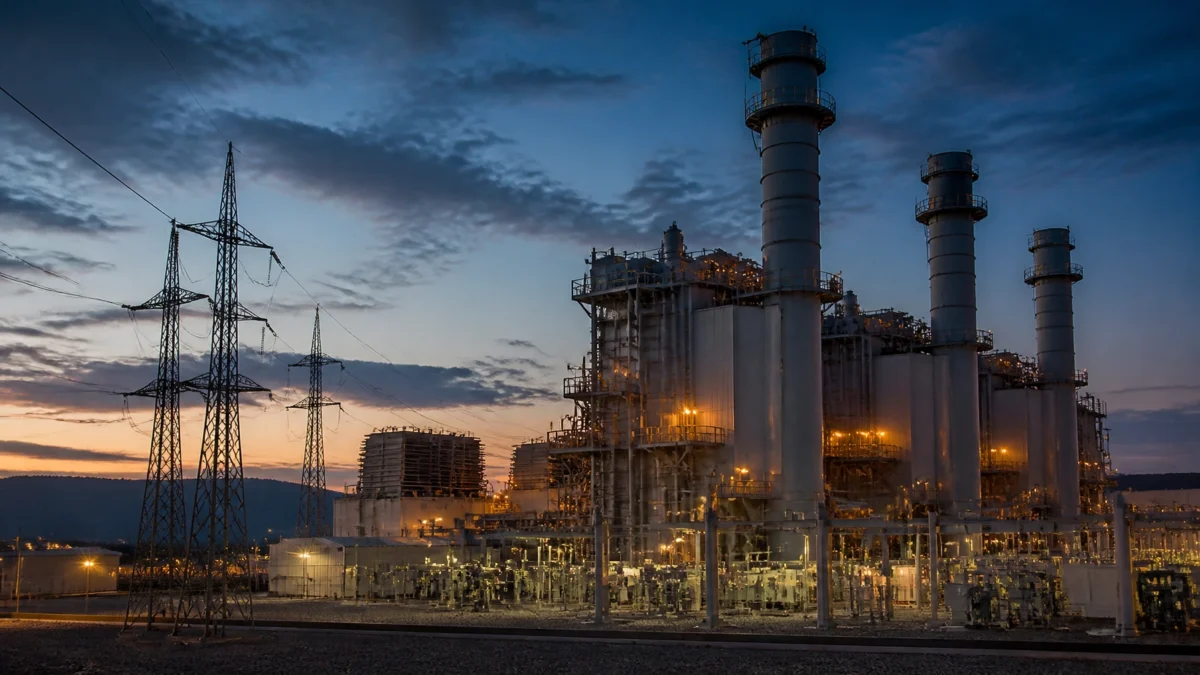
EPA Partially Repeals Power Plant Carbon Standards and Proposes Broader Rollback
ENMG Analysis
The Environmental Protection Agency has finalized a partial repeal of federal greenhouse gas standards for fossil fuel-fired power plants while proposing a broader change to how the federal government regulates carbon dioxide from power generation.
EPA Administrator Lee Zeldin signed both actions on September 14, 2026. They were published in the Federal Register on September 17. The final partial repeal is scheduled to take effect November 16. The separate supplemental proposal remains open for public comment through November 2.
The final rule removes most of the requirements at issue in the 2024 Carbon Pollution Standards, including specified carbon capture requirements for existing coal plants and new baseload natural gas plants. The supplemental proposal goes further. It asks whether Section 111 of the Clean Air Act authorizes EPA to regulate power plant greenhouse gas emissions in response to global climate change concerns at all.
Together, the actions could change how generators, utilities, state regulators, technology developers, and grid operators plan for future electricity supply. Their effects must be evaluated separately: one is a final rule with a future effective date; the other is a proposal that EPA has not finalized.
From White House review to two EPA actions
The supplemental proposal entered review at the Office of Management and Budget on August 24. At that point, White House review was a procedural step before publication. The proposal has since completed that stage and appeared in the Federal Register.
The Office of Information and Regulatory Affairs, or OIRA, operates within OMB and reviews significant regulatory actions. Its review does not replace EPA’s rulemaking obligations. EPA must consider comments on the supplemental proposal and issue a separate final decision before its proposed broader rescission could take effect.
The distinction matters because EPA did not finalize its argument that it lacks authority to regulate power plant greenhouse gases under Section 111. In the final partial repeal, the agency said it was not acting on that proposed determination. Instead, it finalized changes based on its reassessment of the emissions-control systems and requirements in the 2024 standards.
EPA’s power-sector rule page provides both September actions, the earlier proposal, and supporting analyses. ENMG’s earlier reporting on the proposal to repeal EPA power plant regulations provides context for how the rulemaking reached this point.
What the partial repeal changes
The Biden administration’s 2024 Carbon Pollution Standards established emissions requirements for several categories of fossil fuel-fired power plants.
For long-term existing coal-fired units, the rule used carbon capture and storage as the best system of emission reduction, with a performance level equivalent to approximately 90% carbon capture and a compliance date of January 1, 2032. Certain new baseload natural gas combustion turbines also faced a later phase based on 90% carbon capture.
The rule included a different pathway for some existing coal units expected to retire before 2039. Those plants could face requirements based on co-firing with natural gas rather than installing carbon capture equipment.
EPA’s 2025 repeal proposal argued that those requirements should be withdrawn for several reasons, including the agency’s view that 90% carbon capture was not adequately demonstrated, that the cost was not reasonable, and that the infrastructure needed for capture, transport, and storage could not be deployed on the required schedule.
EPA has now finalized the repeal of the emission guidelines for existing fossil fuel-fired steam generating units, the carbon capture-based standards for coal units undertaking a large modification, and the later carbon capture-based standards for new baseload combustion turbines.
It has not repealed every greenhouse gas requirement for new power plants through that final rule. EPA states that it is leaving the 2024 efficiency-based first-phase standards for new combustion turbines in place. Whether the remaining requirements should also be removed is part of the separate, broader proposal.

The broader Section 111 proposal
The supplemental proposal addresses a statutory question beyond the suitability of carbon capture or natural gas co-firing as compliance methods.
EPA proposes that Section 111 of the Clean Air Act does not authorize it to regulate emissions from power plants in response to global climate change concerns. The agency seeks comment on rescinding greenhouse gas-related findings and determinations it made in 2015 and retained in the 2024 rulemaking. Under EPA’s proposal, that reasoning would support repealing the remaining associated greenhouse gas standards for fossil fuel-fired power plants.
If EPA ultimately finalizes that position and it survives judicial review, the implications could extend beyond the specific carbon capture requirements removed by the partial repeal. It could limit a future administration’s ability to use Section 111 to regulate power sector greenhouse gases without a different legal basis or congressional action.
For now, that broader legal conclusion remains EPA’s proposal, not a final finding.
How the Endangerment Finding fits into the strategy
The power sector proposal follows EPA’s February 2026 rescission of the 2009 greenhouse gas Endangerment Finding.
That finding concluded that greenhouse gases are air pollutants that may reasonably be anticipated to endanger public health and welfare. EPA used it as the foundation for greenhouse gas standards covering motor vehicles and engines. The February rule rescinded the finding and repealed federal motor vehicle greenhouse gas standards, according to EPA’s final-rule summary.
Power plant regulation under Section 111 is legally distinct from motor vehicle regulation under Section 202. EPA must address the statutory requirements applicable to stationary sources rather than assume that rescinding a motor vehicle finding automatically repeals power plant rules.
The new power sector proposal attempts to apply the administration’s broader interpretation of EPA’s greenhouse gas authority to stationary sources. ENMG previously examined the February action and its wider implications in Federal GHG Deregulation Analysis: EPA’s Endangerment Finding Reversal and the Energy Value Chain.
The regulatory picture therefore has two parts:
- Final partial repeal: EPA has finalized the removal of specified requirements from the 2024 Carbon Pollution Standards. Its effective date is November 16, 2026.
- Supplemental proposal: EPA is seeking comment on rescinding the relevant power plant greenhouse gas findings and repealing the remaining associated standards under Section 111. Comments are due November 2, 2026.
What remains of the 2024 standards
The scope of each action matters for utility planning. A final rule removing a specific carbon capture requirement is different from a final determination that EPA cannot regulate power plant greenhouse gases under Section 111.
| Requirement or issue | Status as of September 21, 2026 |
|---|---|
| Emission guidelines for existing fossil fuel-fired steam generating units, including the 2024 coal unit pathways | Repealed by EPA’s final partial repeal, scheduled to take effect November 16 |
| Carbon capture-based standards for coal units undertaking a large modification | Repealed by the final partial repeal, scheduled to take effect November 16 |
| Later carbon capture-based standards for new baseload combustion turbines | Repealed by the final partial repeal, scheduled to take effect November 16 |
| First-phase efficiency-based standards for new combustion turbines | Not repealed by the final partial repeal |
| EPA’s broader authority to regulate power plant greenhouse gases under Section 111 | Subject of the supplemental proposal; no final decision on that question |
Source: EPA’s final partial repeal and supplemental proposal.
EPA’s final rule estimates $160 billion in present-value power sector compliance cost savings over 2026–2047 using a 3% discount rate, or $95 billion using a 7% discount rate, in 2024 dollars discounted to 2025. These are EPA’s modeled compliance-cost estimates, not guaranteed reductions in customers’ electricity bills. The figures also differ from estimates associated with earlier versions of the proposed repeal.
Why utilities are watching closely
Utilities have several reasons to support a clear outcome, regardless of their position on the underlying climate policy.
First, the 2024 standards created significant planning obligations. A utility with an existing coal unit had to evaluate retirement, natural gas co-firing, carbon capture, or other compliance options. A company considering a new baseload gas plant had to account for the possibility of future carbon capture, carbon dioxide transportation, and permanent storage.
The final partial repeal could reduce capital requirements tied to the provisions it removes and give generators more flexibility in choosing whether to operate, modify, or retire units. It could also change how some coal and natural gas projects are financed where investors viewed federal emissions requirements as a material project risk.
At the same time, regulatory uncertainty remains a business risk. The broader Section 111 question is still open, and the final partial repeal may face legal challenges. A rule that is proposed, finalized, challenged, stayed, remanded, or replaced can create uncertainty over equipment orders, permitting, fuel contracts, plant valuations, and long-term power purchase agreements.
The practical effect will depend on the final rule’s implementation, EPA’s decision on the broader proposal, and how courts respond.
The grid question is more complicated than a single emissions rule
Power sector greenhouse gas regulation affects more than the plant fence line. It influences generation availability, fuel demand, transmission planning, carbon capture infrastructure, and the timing of retirements.
EPA frames its final partial repeal around affordable and reliable electricity. Utilities and grid operators will still have to evaluate whether existing coal and gas units are operationally necessary as electricity demand rises, including demand from manufacturing, data centers, and artificial intelligence facilities.
The broader power system will continue to include natural gas, coal, nuclear, hydropower, wind, solar, battery storage, and transmission. Removing federal carbon requirements does not eliminate the need to balance these resources or build the infrastructure needed to move electricity to customers.
The rollback could extend the operating lives of some fossil fuel units. It could also reduce incentives for utility-scale carbon capture projects and related carbon dioxide pipelines. Conversely, some generators and industrial customers may view the change as a way to preserve firm capacity while transmission projects, nuclear facilities, renewable projects, and storage systems are developed.
The grid outcome will depend on local fuel supplies, plant economics, regional market rules, state policies, reliability requirements, and the pace of electricity demand growth.

The Supreme Court connection
The timing of the supplemental proposal is also significant because the Supreme Court is scheduled to hear Suncor Energy (U.S.A.) Inc. v. County Commissioners of Boulder County on October 5, 2026.
The case involves state-law climate claims brought by Boulder County and other Colorado plaintiffs against energy companies. Suncor, ExxonMobil, and the United States have argued that federal law, including the Clean Air Act, places primary responsibility for regulating interstate greenhouse gas emissions with EPA.
Boulder County argues that its claims are state-law actions involving alleged misinformation and related conduct, not an attempt to regulate emissions through state standards.
EPA’s proposed power sector finding could complicate the federal government’s position. If EPA argues that it lacks authority to regulate greenhouse gas emissions from power plants under Section 111, the companies and the Justice Department may face questions about how the Clean Air Act can simultaneously function as the primary federal regulatory framework.
That does not determine the outcome of Suncor. The Court could decide the case on jurisdictional or preemption grounds, and the legal issues are broader than EPA’s power plant rulemaking. However, the regulatory action and the litigation address overlapping questions about which level of government has authority over industrial greenhouse gas emissions.
What to watch next
The next important developments are procedural as much as substantive:
- EPA’s virtual public hearing on the supplemental proposal, scheduled for October 1, 2026.
- Supreme Court arguments in Suncor, scheduled for October 5, 2026.
- The November 2, 2026, deadline for comments on EPA’s supplemental proposal.
- The November 16, 2026, scheduled effective date of the final partial repeal.
- EPA’s decision on whether to finalize, revise, or withdraw its broader Section 111 proposal.
- Responses from states, utilities, environmental groups, and power sector trade associations.
- Any court challenges and their effects on the rules’ implementation.
- Effects on coal retirements, new gas development, CCS investment, carbon dioxide pipelines, and regional reliability planning.
For power generators, the final partial repeal could reduce federal compliance costs. For utilities and grid planners, it could preserve additional fossil fuel capacity while leaving uncertainty over long-term regulatory direction. For states and environmental stakeholders, the broader proposal raises questions about the future division of federal and state responsibility for greenhouse gas regulation.
The central issue is no longer simply whether one set of emissions standards survives. EPA has removed significant provisions of the 2024 rule and is now asking whether it retains a durable role in regulating power sector greenhouse gases under Section 111 of the Clean Air Act. That question will influence investment decisions across the electricity system and could remain unsettled through further rulemaking and litigation.
Keep In Touch with Shale Magazine
As the new era of energy unfolds, you can bet we’ll be the boots on the ground to keep you informed. Subscribe to Shale Magazine for sharp insight into the arenas that matter most to your life. And don’t forget to listen to our riveting podcast, The Energy Mixx Radio Show, where our very own Kym Bolado interviews the most extraordinary thought leaders, business innovators, and industry experts of our time.


I oppose the supplemental proposal to repeal greenhouse gas standards
I am 85 years old and so quite possibly will not be around when the impact of this legislation is felt worldwide. It deeply saddens me to think of the planet my descendants and younger friends will be left with– due to short-sighted legislation such as this.
Please stop endangering the health and lives of my grandchildren by tying the hands of science to protect them from global warming and the pollution caused by those just trying to become rich. The decisions should only be made based on science and not on politics or the stock market.
These recissions are a trek backwards from a safe and healthy planet Earth for us and for future generations. It sis a result of enormous CORRUPTION and LIES by self-dealing MAGA fascists.