Thacker Pass DOE Loan Gives Washington Potential Equity in Lithium Americas
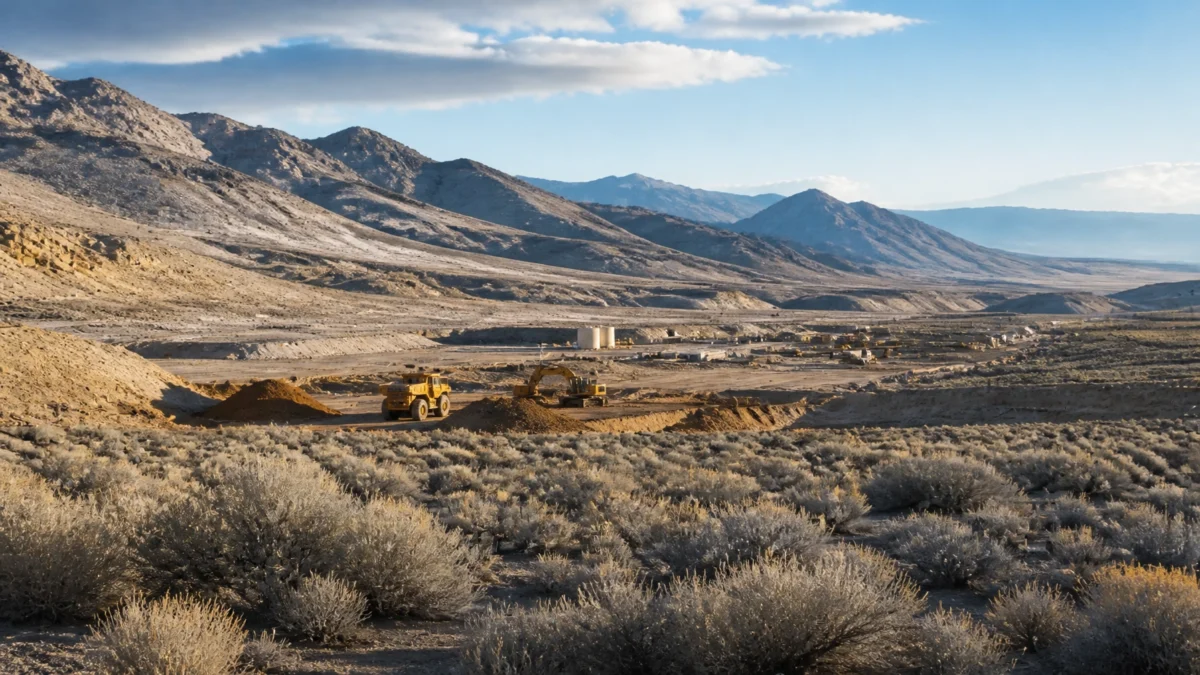
A federal loan supporting Lithium Americas’ Thacker Pass project has moved from policy commitment to construction financing, while giving the U.S. government potential equity exposure to both the company and the Nevada project.
There is an important timing clarification. Public company disclosures identify the $435 million first draw as an October 2025 advance, not a new first-time draw on August 13, 2026. By mid-2026, Lithium Americas had also reported additional advances. The August 13 date is relevant to more recent company financing and project updates, but the original $435 million draw occurred earlier.
The financing remains significant because the Department of Energy is supporting Thacker Pass through a loan facility while also holding warrants that could provide a 5% stake in Lithium Americas and a separate 5% economic interest in the Thacker Pass joint venture with General Motors.
That structure places the federal government in a position that is unusual in U.S. energy policy: not only as a lender, but also as a potential participant in the financial upside of a commodity-producing asset.
The financing structure at a glance
| Item | Details |
|---|---|
| Project | Thacker Pass lithium project |
| Location | Humboldt County, Nevada |
| Borrower | Lithium Nevada Corp., a subsidiary of Lithium Americas |
| DOE program | Advanced Technology Vehicles Manufacturing loan program |
| Revised expected loan amount | Approximately $2.26 billion |
| Original first draw | $435 million in October 2025 |
| Additional reported advances | $432 million in February 2026 and $342 million in June 2026 |
| Phase 1 production target | Approximately 40,000 tons per year of battery-grade lithium carbonate |
| Project partners | Lithium Americas and General Motors |
| DOE company warrant | Potential 5% stake in Lithium Americas |
| DOE project warrant | Potential 5% non-voting economic interest in the Thacker Pass joint venture |
How the Thacker Pass DOE Loan Is Structured
The DOE originally announced a roughly $2.26 billion direct loan in October 2024. That figure included $1.97 billion in principal and approximately $290 million in capitalized interest. Later amendments reduced the expected total loan amount to approximately $2.23 billion, primarily because projected capitalized interest changed.
The loan is intended to finance construction of Thacker Pass’ mine and lithium carbonate processing facilities. The project is designed to produce battery-grade lithium carbonate, a chemical feedstock used in lithium-ion batteries.
According to the DOE’s project summary, Thacker Pass is located next to a mine site containing the largest confirmed lithium resource in North America. The agency estimates that full Phase 1 production could support batteries for as many as 800,000 electric vehicles annually.
Lithium Americas reported receiving its first $435 million advance on October 20, 2025, followed by a second advance of $432 million on February 24, 2026. The company received a third advance of $342 million on June 3, bringing cumulative DOE advances to approximately $1.209 billion.
What the Federal Government Could Receive
The DOE’s position is structured through warrants rather than an immediate purchase of common stock or joint venture units.
Under the company warrant, DOE has the right to purchase approximately 18.3 million Lithium Americas common shares at a nominal exercise price of $0.01 per share. The warrant represents approximately 5% of the company’s equity based on the capitalization date specified in the financing documents.
DOE also holds a separate warrant covering non-voting joint venture units. If exercised, the warrant would provide a 5% economic interest in the Thacker Pass joint venture with GM.
That distinction matters. The federal government does not automatically own 5% of the company or the project merely because it holds the warrants. Ownership would arise if the warrants are exercised under their terms.
Thacker Pass economic interest after potential DOE exercise

Lithium Americas  ███████████████████████████████████████████████████ 59%
General Motors    █████████████████████████████████                36%
DOE               █████                                                  5%
Voting control would remain different from economic ownership. The DOE’s joint venture units are non-voting, leaving Lithium Americas and GM with the project’s voting interests under the disclosed structure.
This arrangement limits the government’s direct governance role while giving taxpayers potential exposure to the project’s future value.
Why Thacker Pass Matters to U.S. Lithium Supply Chains
Lithium is a central input for electric vehicle batteries, stationary storage systems and several defense-related technologies. It also contributes indirectly to the infrastructure supporting data centers, where battery energy storage can provide backup power, manage peak demand and support grid reliability.
The United States has historically depended heavily on imported battery materials and processed chemicals. Mining lithium domestically does not solve that problem by itself. The broader supply chain also requires chemical conversion, cathode and anode manufacturing, battery-cell production, recycling, transportation and reliable electricity.
Thacker Pass is designed to address part of that gap by combining lithium extraction with domestic processing. DOE estimates that the project could produce approximately 40,000 tons of battery-grade lithium carbonate annually during Phase 1.
The project’s progress therefore affects more than the EV market. Domestic lithium production could support:
- Electric vehicle and plug-in hybrid battery manufacturing
- Grid-scale battery storage
- Backup systems for data centers and other critical facilities
- Defense electronics and mobile power systems
- Broader U.S. battery manufacturing capacity
- Industrial demand for domestic chemical processing
However, the project will still operate within a global lithium market. Prices, demand growth, Chinese processing capacity, competing projects in Australia and South America, permitting, construction costs and battery chemistry trends will influence its commercial performance.
Lithium-iron-phosphate batteries, for example, use less nickel and cobalt than some competing chemistries but still require lithium. Changes in battery technology may alter the pace and composition of demand without eliminating the need for reliable lithium supply.
ENMG’s analysis of the broader U.S. critical minerals strategy examines how the federal government is supporting domestic mining, processing and refining projects intended to reduce foreign supply-chain exposure.
Federal Policy Is Expanding Across the Critical Minerals Chain
The Thacker Pass financing is part of a broader federal effort to secure critical mineral supply chains through loans, grants, equity-linked investments, export financing and international partnerships.
Several recent transactions illustrate the range of approaches:
- Westwater Resources received approval for a $25 million Export-Import Bank loan to support development of its Kellyton Graphite Plant in Alabama. The project is intended to produce coated spherical purified graphite for lithium-ion battery anodes.
- The U.S. International Development Finance Corporation has supported a broader critical minerals strategy involving the Democratic Republic of Congo, Gécamines and Mercuria. The structure includes mineral marketing and proposed infrastructure financing connected to copper and cobalt supply.
- USA Rare Earth completed its $2.8 billion combination with Serra Verde Group on September 3, 2026. Serra Verde owns and operates the Pela Ema rare earth project in Goiás, Brazil.
The USA Rare Earth sentence required a factual update—not merely a new link. The combination was pending when originally announced but was completed on September 3, 2026.
Together, these developments show that Washington is pursuing multiple points of control across the supply chain. Domestic projects address mining and processing inside the United States. International partnerships seek to secure access to copper, cobalt and rare earths from allied or strategically important jurisdictions.
The policy objective is not simply to produce more minerals. It is to make those minerals available to manufacturers through supply chains that are less exposed to geopolitical disruption, export restrictions and concentrated processing capacity.
The DOE Warrants Create Opportunity and Risk
For supporters of the arrangement, the DOE warrants could align taxpayer interests with project success. If Thacker Pass becomes a profitable producer, the government could benefit from future equity appreciation and project distributions rather than relying only on loan repayment.
The structure may also help the project attract private capital. A large federal commitment can reduce financing uncertainty, particularly for a project requiring billions of dollars before commercial revenue begins.
The risks are equally important.
First, the government is taking exposure to a mining and processing project that faces ordinary commercial risks. Construction delays, cost inflation, technical problems, permitting disputes, weaker lithium prices or slower battery demand could reduce the value of the warrants.
Second, the arrangement may create questions about the boundary between public lending and direct government participation in private companies. The government’s role is limited by the warrant terms and non-voting project interest, but the policy precedent could influence future negotiations with critical mineral developers.
Third, a federal loan does not remove the project’s debt obligations. Lithium Americas remains responsible for repayment, and future capital requirements may still require additional debt, equity or strategic investment.
The government’s potential equity position also creates an accountability issue. Federal agencies must balance national supply-chain objectives with taxpayer protection, transparent valuation and consistent treatment of competing technologies and companies
What Investors and Policymakers Should Watch Next
The next milestones will help determine whether the financing structure produces a functioning domestic supply chain or simply increases available project capital.
Readers should watch:
- Construction progress and spending at Thacker Pass as the project approaches peak capital requirements.
- Additional DOE loan advances and the amount of the facility ultimately drawn.
- Lithium Americas’ liquidity and financing needs, including convertible debt and equity-market activity.
- The status of DOE warrants, including whether they are exercised and how dilution is handled.
- Lithium prices and battery demand, which will shape project economics.
- Commissioning and production timelines for the Phase 1 processing facilities.
- Community, environmental and permitting developments in Nevada.
- Future federal transactions involving graphite, copper, cobalt, rare earths and other strategic materials.
The Thacker Pass arrangement does not establish that the government has already become an active owner of the project. It establishes a contingent ownership position through warrants connected to federal financing.
That distinction is central to understanding the policy. Washington is using public credit to support a private critical minerals project, while negotiating potential financial upside for taxpayers. Whether this becomes a model for future mineral investments will depend on construction performance, project economics and the government’s handling of the risks that come with becoming both lender and prospective equity participant.
Keep In Touch with Shale Magazine
As the new era of energy unfolds, you can bet we’ll be the boots on the ground to keep you informed. Subscribe to Shale Magazine for sharp insight into the arenas that matter most to your life. And don’t forget to listen to our riveting podcast, The Energy Mixx Radio Show, where our very own Kym Bolado interviews the most extraordinary thought leaders, business innovators, and industry experts of our time.