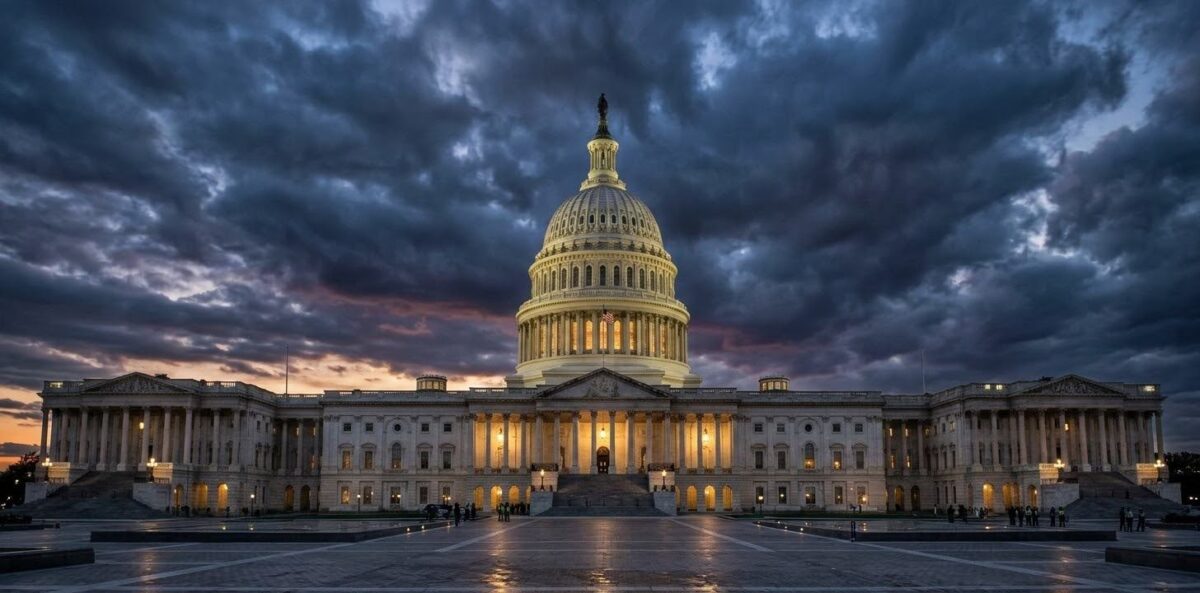
Just a week after the November midterm elections, Congress took up a sweeping bipartisan energy bill aimed at accelerating infrastructure development while addressing growing public concerns over data centers and rising electricity costs. Those concerns were among the issues that helped Democrats secure majorities in both chambers of Congress.
Reasons for Data Center Legislation
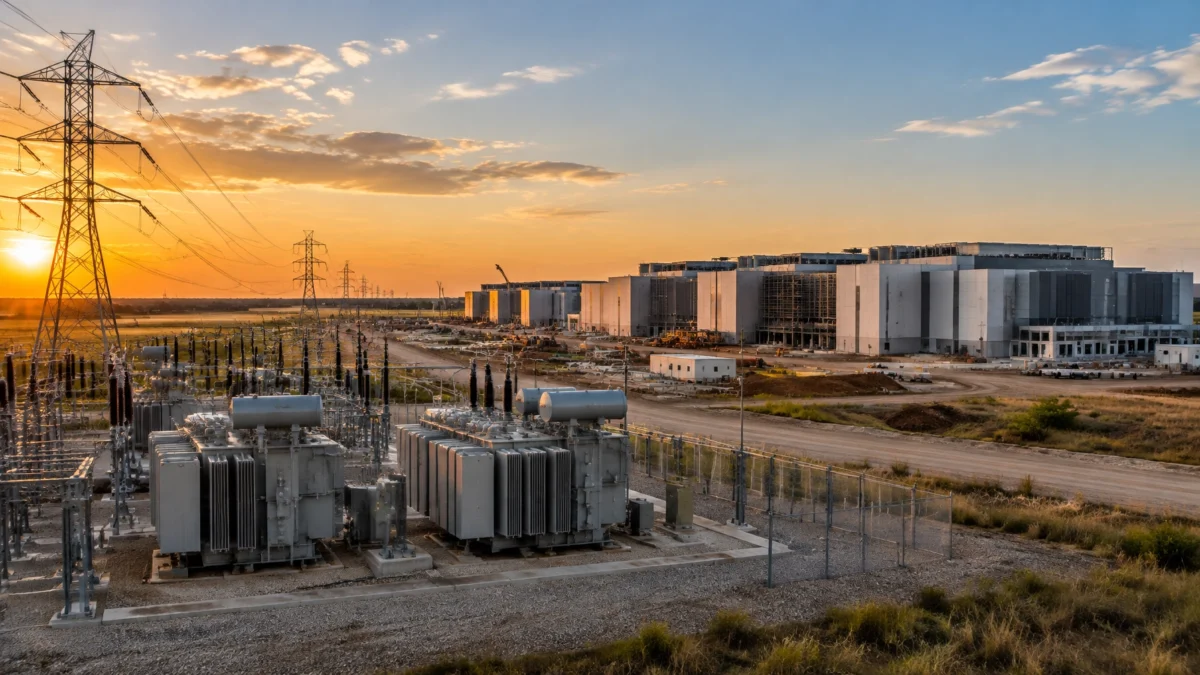
The proposed legislation, which has taken years to develop, would accelerate the approval of new power plants and transmission lines, while requiring large data center operators to contribute more heavily financially for the cost of grid upgrades needed to power such facilities. Advocates for the bill believe it could offer Congress its best opportunity to address near-term rising electricity costs associated with artificial intelligence (AI) infrastructure development.
The investment firm TD Cowen estimates the chances of the Bipartisan American Affordability and Jobs Act passing at around 25%, down from 40% before the election. The decline reflects concerns that Democrats, strengthened by their election victories, may be less willing to accept provisions that would accelerate oil and gas infrastructure development or weaken environmental protections.
Even if the bill does not pass, it opens the door for greater discussion around data center development, as consumers grow increasingly concerned over the potential impact of the build-out on their energy bills. In a Gallup poll published in May, 71% of respondents said they opposed the construction of AI data centers in their local area, with 48% strongly opposed.
By presenting the legislation so early on, the Democratic Party is making its aim to regulate data center development and tackle rising electricity bills clear, as the party is expected to introduce several bills targeting AI and data center development when it takes control of Congress next year.
Data Center Power Demand Outlook
As U.S. tech majors accelerate the development of giant AI data centers, they are putting increasing pressure on utilities to provide sufficient power to run these new facilities. The U.S. Energy Information Administration (EIA) reported in November that national electricity consumption will reach record highs in 2026 and 2027, citing power-hungry AI data centers and electrification as the main drivers. The EIA expects power demand to increase from a record 4,216 billion kilowatt-hours (kWh) in 2025 to 4,306 billion kWh in 2026 and 4,370 billion kWh in 2027.
The EIA predicts that renewable generation as a percentage of total generation will increase from around 24% in 2025 to 25% in 2026 and 28% in 2027, while nuclear power’s share will remain at 18% from 2025 to 2027.
Tech companies are increasingly investing in new energy projects to support this anticipated increase in power demand. According to the EIA, U.S. power plant developers and operators planned to add a record 86 GW of new utility-scale generating capacity in 2026, although actual additions may fall short of that figure.
Tech companies are increasingly investing in new energy projects to support this anticipated increase in power demand, with U.S. power plant developers and operators planning to
Consumers are growing increasingly concerned that the cost of this build-out will drive up electricity bills. Many also worry that if the AI bubble bursts, ratepayers may be left footing the bill. The proposed legislation aims to establish protections to prevent households, businesses, and other utility customers from being left to pay the costs if projects fail.
Support and Opposition for the Bill
President Trump endorsed the bill in a social media post on November 8th, emphasizing its data center provisions and encouraging the Senate to pass it. Given his previous steadfast support for data center development, the endorsement came as somewhat of a surprise.
Just a few months before, Trump wrote on Truth Social, “The only reason that communities throughout the U.S.A. should not want Data Centers is if they want to end up being backward and poor. If they want to be successful and rich, with far lower taxes and jobs all over the place, let Data Reign.”
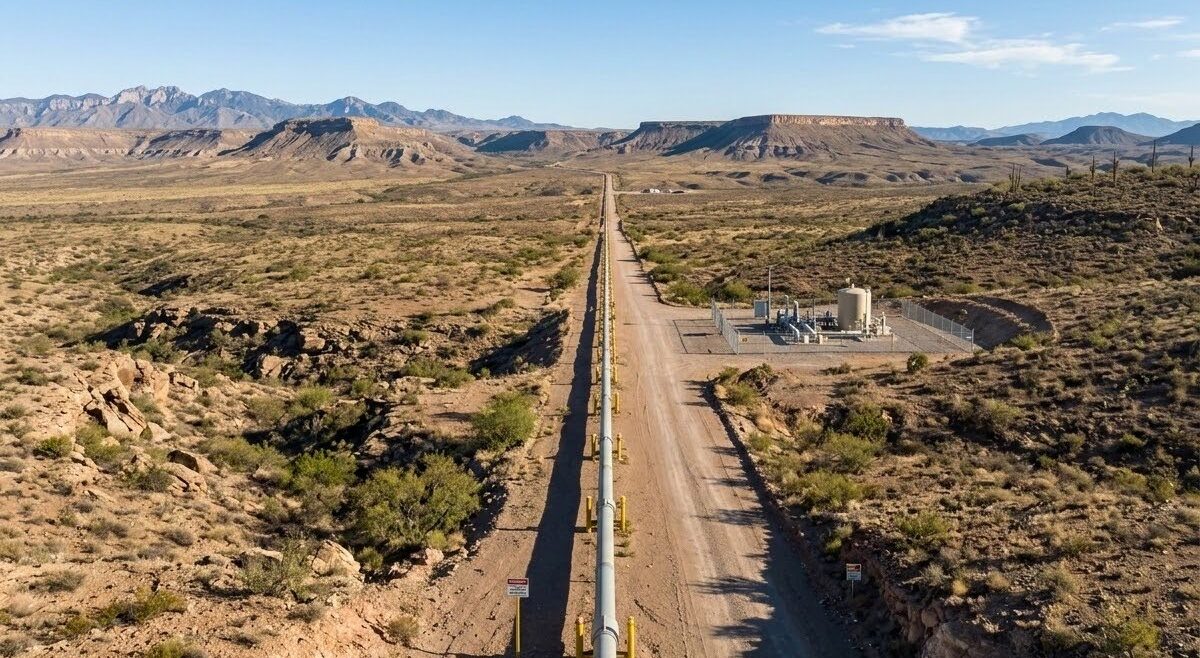
Trump’s support for the bill is likely because, despite the provisions protecting ratepayers, the BAAJA is expected to make it easier to develop large infrastructure projects, such as oil and gas pipelines, and data centers, if passed. Meanwhile, it would scale back environmental protections. It would also support the development of renewable energy projects, something Trump has said he does not support.
This has led the Democratic Party and green groups to become divided on the matter, questioning whether trade-offs are worth supporting. Former Vice President Al Gore said it would be a “serious mistake” to pass the bill, which has already cleared a procedural vote in the U.S. Senate.
Gore has urged lawmakers to rethink the bill. “I think it would be a serious mistake, particularly in the wake of the astonishing election results,” said Gore, referencing Democrats’ midterm victory. “The fact that President Trump endorsed it enthusiastically is a clue,” he added.
The proposed legislation highlights the growing challenge of balancing U.S. data center expansion with affordable and reliable electricity for consumers. While the bill could accelerate infrastructure development and introduce greater protections for ratepayers, its environmental trade-offs and uncertain prospects for passage reflect the political divisions shaping the evolving U.S. energy policy.