
ENMG Analysis
How Could DOE’s $581 Million TVA Grid Expansion Add 2.5 GW?
The U.S. Department of Energy announced plans on October 13 to support 84 Tennessee Valley Authority transmission and distribution projects across eight states. The proposed $581 million package includes $250 million in federal funding and about $331 million in applicant cost share. DOE expects the projects to add approximately 2.5 gigawatts of grid capacity, support about 800 jobs, and help mitigate outages for a region serving 2.58 million families and businesses, the department announced.
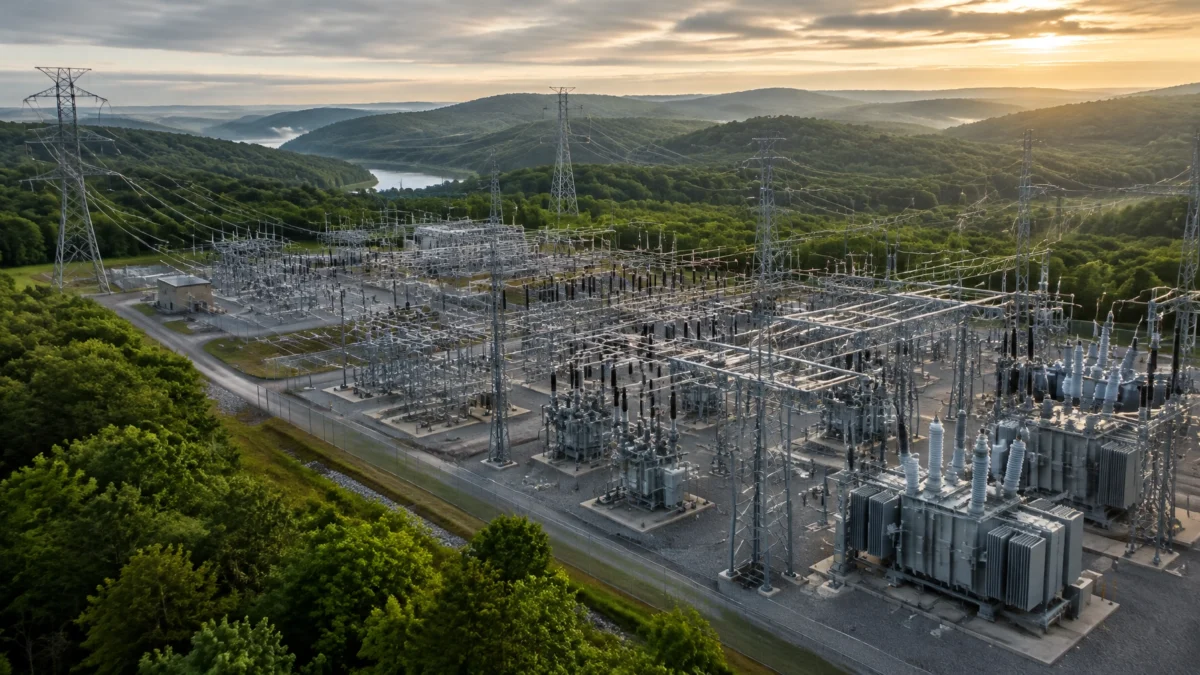
The TVA grid expansion is significant because it targets a constraint that can limit the value of power plants and energy resources alike: the ability to move electricity to where it is needed. But the 2.5 GW figure does not represent new electricity generation. It is an estimate of additional grid capacity associated with transmission and distribution upgrades. Whether those upgrades ultimately ease congestion or reduce outage risk will depend on project execution, operating conditions, and the availability of generation and other grid resources.
A selected investment, not money already spent
The $581 million total combines a planned $250 million federal contribution with approximately $331 million in applicant cost share. In other words, federal funding is one part of the investment, not the full project cost.
There is also an important distinction between DOE’s announcement and funds being disbursed. The agency’s release describes an intention to support the projects. Final federal funding, project scope, schedules, and other award conditions remain subject to executed DOE agreements and applicable environmental, permitting, regulatory, and Tribal reviews. The October 13 announcement is therefore not confirmation that the full amount has been committed under final agreements or spent.
That distinction matters to utilities, contractors, workers, and customers assessing when improvements may be built and begin delivering benefits. DOE estimates that the project will support about 800 jobs, but the release does not provide a project-by-project schedule or detail the timing and locations of those positions.
The package falls under the “Resilience Amplified: Multi-Market Grid Interconnection Initiative,” part of DOE’s Grid Resilience and Innovation Partnerships (GRIP) program. DOE says the investments are intended to reduce congestion, improve efficiency, make better use of existing transmission infrastructure, and strengthen reliability. The agency’s stated goals include helping ensure that 2.58 million families and businesses have access to affordable, reliable, and secure power.
More capacity to move electricity
Transmission lines and local distribution systems serve different but connected roles. High-voltage transmission moves large quantities of electricity over longer distances; distribution networks deliver it to homes and businesses. Upgrades to either part of the system can address constraints, but the type and location of the improvement determine what bottleneck it can relieve.
A transmission-capacity increase can make it possible to move more power over an upgraded route. It does not, by itself, build a power plant, guarantee that additional electricity will be available during peak demand, or ensure that every customer will experience fewer outages. Reliability also depends on generation, system operations, local equipment, and the ability of the network to withstand and recover from disruptions.
That system-wide context is especially relevant as electricity demand grows from households, manufacturing, data centers, and other large users. New generation, whether fueled by natural gas, nuclear power, coal, hydropower, wind, or solar, must connect to the grid and reach consumers. Transmission capacity can help reduce bottlenecks between supply and demand, but it is not a substitute for generation, storage, or local distribution investment. The planned TVA projects address part of that broader infrastructure challenge.

How reconductoring can help, and where it cannot
The TVA announcement builds on a separate DOE selection for the SPARK program, or Speed to Power through Accelerated Reconductoring and other Key Advanced Transmission Technology Upgrades. Under SPARK, TVA plans to upgrade about 125 miles of existing transmission lines across Tennessee, Alabama, and North Carolina using advanced conductors and grid-management technology. DOE estimates the $159.7 million project could add approximately 1,900 MW of transmission capacity and reduce congestion.
Reconductoring means replacing the conductors, the wires that carry electricity, on existing lines with advanced conductors designed to carry more power, including at higher temperatures. Because the work can use the existing transmission corridor, it may increase the capacity of a line without acquiring a new right-of-way or constructing an entirely new route and towers. That can avoid some of the land-acquisition and permitting steps associated with new corridors, though the necessary reviews and approvals still depend on the project.
The approach has limits. It can improve a constrained line where an existing corridor is available, but it cannot create a transmission path where none exists. A more capable conductor on one segment may also fail to resolve a bottleneck elsewhere on the network. The value of an upgrade depends on how the entire system performs, including adjacent lines, substations, and operating conditions.
The SPARK project’s 1,900 MW estimate should not be conflated with the GRIP projects’ approximately 2.5 GW estimate. The first figure is specifically described by DOE as added transmission capacity from reconductoring and related technology upgrades. The second is a broader grid-capacity estimate for 84 transmission and distribution projects. Both describe the ability of the grid to accommodate or move power; neither means new generation capacity is being built.

Reading the combined investment figures
DOE says the GRIP and SPARK projects together represent nearly $741 million in planned grid investment, including approximately $329.8 million in federal support, and are expected to add more than 4,300 MW of additional grid capacity. Those combined figures describe two initiatives with separate project scopes and capacity measures.
The nearly $741 million total is consistent with adding the approximately $581 million GRIP package to the $159.7 million SPARK project. Similarly, the roughly $329.8 million in federal support combines the $250 million GRIP amount with the federal portion associated with SPARK. DOE’s “more than 4,300 MW” estimate brings together the GRIP figure and SPARK’s approximately 1,900 MW estimate. It should be treated as a combined program estimate, not as a single, uniform measure of generation capacity.
For broader context, ENMG’s coverage of the DOE’s SPARK transmission upgrade program examines the agency’s focus on upgrades to existing infrastructure. The strategy complements, rather than replaces, the larger task of building new transmission corridors where they are needed. It also sits alongside other reliability measures, including generation, storage, demand response, and emergency actions such as the DOE’s emergency grid orders.
Who may benefit, and what remains uncertain
TVA customers and businesses in the project area could benefit if the upgrades help reduce congestion, improve power delivery, or mitigate outages. Utilities may gain additional flexibility in operating parts of the network, while construction and equipment suppliers could see work if projects move forward. More broadly, a less constrained grid can help connect available electricity supply to load centers.
The announcement does not establish that household bills will fall. DOE officials have described lower costs for ratepayers as an objective, but the release provides no quantified savings estimate or explanation of how costs will be allocated. The applicant cost share is part of the project funding structure; how project costs are ultimately recovered, and what that means for customers, will depend on the applicable agreements and regulatory processes.
The projects also have to be judged against implementation realities: final agreements, scope, schedules, required reviews, and the engineering conditions at each site. An upgrade’s expected capacity is not the same as electricity delivered at every hour or a guaranteed improvement in outage performance.

What to watch next
The next milestones are the execution of DOE agreements and the publication of more detailed project information, including scope, schedules, and review requirements. Readers should also watch for updates on the 84 projects’ locations and how the planned improvements address specific congestion or resilience needs.
For the energy system, the central question is whether the upgrades can be delivered on schedule and relieve constraints that matter in practice. The DOE announcement establishes a substantial planned investment and a set of capacity expectations, but final funding and construction remain ahead. The distinction between planned grid improvements and operating infrastructure will be essential as TVA and DOE move from selection to implementation.
Keep In Touch with Shale Magazine
As the new era of energy unfolds, you can bet we’ll be the boots on the ground to keep you informed. Subscribe to Shale Magazine for sharp insight into the arenas that matter most to your life. And don’t forget to listen to our riveting podcast, The Energy Mixx Radio Show, where our very own Kym Bolado interviews the most extraordinary thought leaders, business innovators, and industry experts of our time.