U.S. Critical Minerals Strategy Expands Domestic Mining
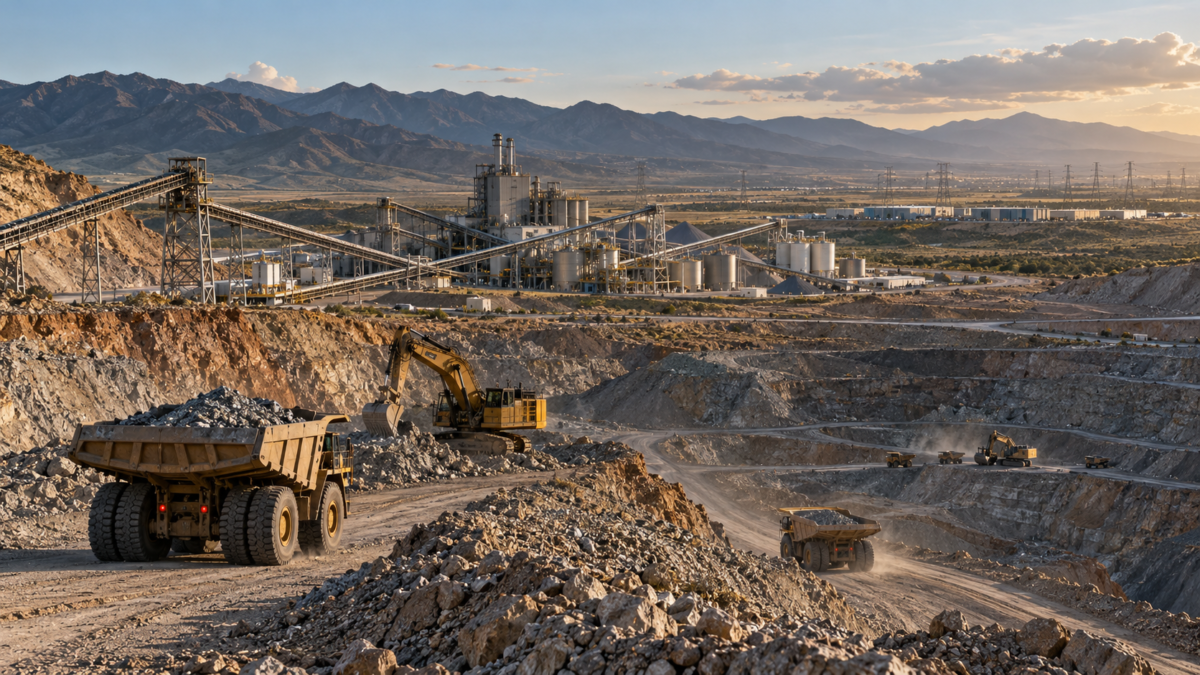
The U.S. critical minerals strategy is accelerating plans to expand domestic mining, processing and refining as the country seeks more secure supplies for energy, defense and advanced manufacturing.
Interest in domestic critical mineral production grew under the Biden administration as federal policies supported batteries, renewable energy and other mineral-intensive technologies. The Trump administration has accelerated mining and processing initiatives intended to reduce U.S. dependence on foreign suppliers and strengthen domestic energy and technology supply chains.
What are Critical Minerals and Why Are They Important?
Critical minerals are those considered essential to countries’ economies or development, with several of them needed for a wide range of modern technologies. They are key for the defense, healthcare, and electronics sectors, as well as for renewable energy technologies. Copper, lithium, nickel, cobalt, graphite, rare earth elements, aluminum, manganese, silicon, and silver are used in clean energy technologies, including wind turbines, solar panels, semiconductors, EV batteries, and transmission infrastructure.
Critical mineral mining currently remains concentrated in a small handful of resource-rich countries. Global demand for critical minerals is expected to more than double by 2030 and quadruple by 2050, prompting governments to race to develop new mining projects to meet the growing demand.
How the Biden Administration Supported Critical Mineral Supply Chains
During his first weeks in office, President Biden signed Executive Order 14017, America’s Supply Chains, thereby mandating a 100-day review of U.S. critical mineral supply chains. Following the report’s recommendations, the Biden Administration mobilized significant resources to strengthen domestic critical minerals supply chains, from mining to manufacturing to recycling. Between 2021 and 2024, the private sector announced over $120 billion in investments in battery and critical mineral supply chains.
The International Energy Agency’s Global Critical Minerals Outlook 2025 showed that, for 19 out of 20 important strategic minerals, China is the world’s leading refiner, with an average market share of 70%. The growing reliance on China for critical minerals has also helped encourage the United States to accelerate the development of its critical mineral mining and refining activities to support both energy and national security.
How Trump Is Expanding the U.S. Critical Minerals Strategy
President Trump has often voiced his support for mineral mining, particularly to counter China’s dominance in the sector. In August, Trump said he planned to make the U.S. the “minerals superpower of the world” and curb reliance on market leader China. This followed news that the government would invest over “$2 billion in funding in critical mining and mining-related projects to revitalize the industry and over $180 million in mining school investments to bolster the American mining workforce.”
Meanwhile, the Department of Energy (DoE) announced it planned to award $500 million in grants to seven companies developing domestic lithium, cobalt, and other mineral and battery projects, to support domestic mineral mining and processing. The announcement attracted hundreds of applications.
In September, the House passed a bill that would make all mining and mineral processing projects eligible for accelerated permitting. The Protecting Domestic Mining Act (H.R. 1501) would provide all types of mining with expedited federal environmental (FAST-41) permitting for specific infrastructure projects. The move, which passed 218-201, would overturn a Biden administration proposal to limit FAST-41 permitting eligibility to mining, processing, and recycling minerals.
Environmental and Public-Land Concerns
While the importance of critical mineral production and processing is broadly agreed across the political spectrum, there are concerns about the management of domestic mining. In July, President Trump reduced the size of two national monuments in Utah. In the following month, at least nine mining requests were made for the land, which is no longer protected from development, according to public records.
National monuments are public lands that are legally protected from development, similarly to national parks. Removing that status could allow for development in ecologically important areas of the United States. The area between the Bears Ears and Grand Staircase-Escalante national monuments provides a vast wildlife habitat and is archaeologically significant. However, the land underneath is thought to hold vast reserves of uranium and other precious metals.
President Trump also signed an executive order in 2025 calling for deep-sea mining to secure critical minerals for the United States, a move that has been widely criticized by the international community.
In 1994, the autonomous International Seabed Authority (ISA) was established under the United Nations Convention on the Law of the Sea (UNCLOS) to oversee and regulate global offshore mining activities. The ISA has long restricted deep-sea mining as it works to understand the potential implications of mining activities on marine life and ecosystems. If Trump acts unilaterally on seabed mining, it has the potential to incentivize other countries to do the same, which could undermine the authority of the ISA.
Both the Biden and Trump administrations have highlighted the importance of developing U.S. domestic mineral mining activities to support national security and establish the country as a major global energy and tech power. While the U.S. is unlikely to decrease its dependence on foreign minerals altogether, new mining and refining activities could help it to diversify its supply. However, mining expansion is likely to face permitting, environmental, and community opposition, which could hinder the pace of development.
Keep In Touch with Shale Magazine
As the new era of energy unfolds, you can bet we’ll be the boots on the ground to keep you informed. Subscribe to Shale Magazine for sharp insight into the arenas that matter most to your life. And don’t forget to listen to our riveting podcast, The Energy Mixx Radio Show, where our very own Kym Bolado interviews the most extraordinary thought leaders, business innovators, and industry experts of our time.