
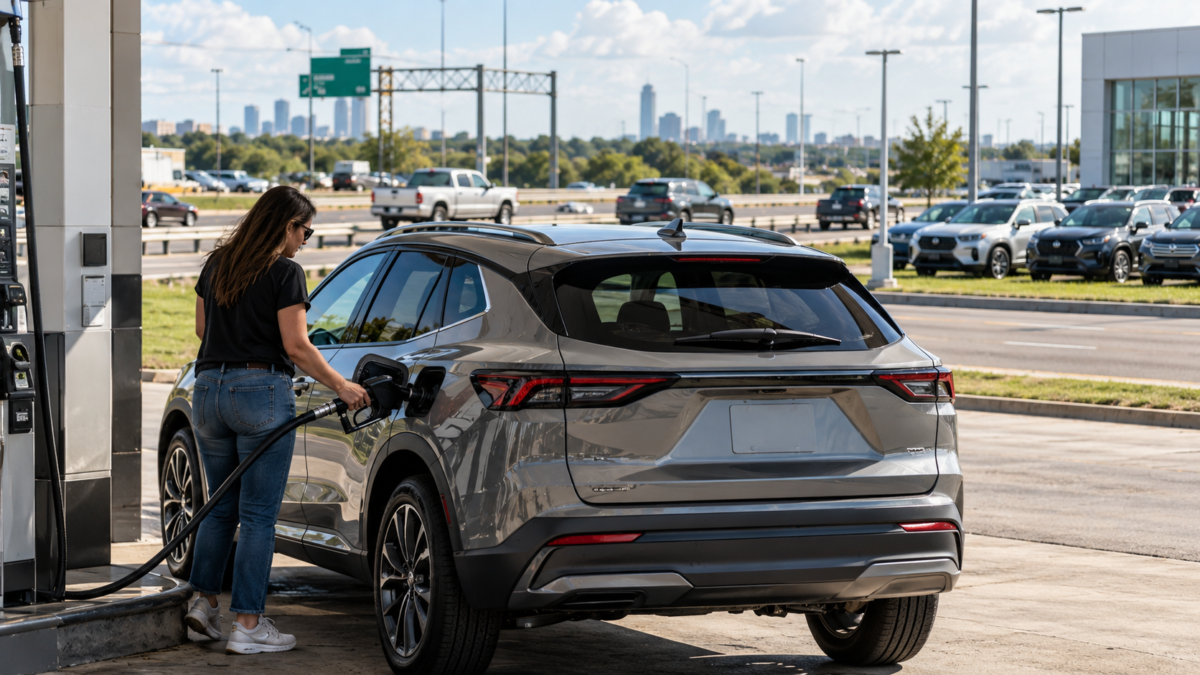
The sale of electric vehicles (EVs) and hybrid electric vehicles (HEVs) has grown significantly over the last decade as automakers offer a wider variety of models, from more affordable to luxury options, with substantial improvements in performance and range.
However, the share of EVs and HEVs in the United States market has increased more slowly than many automakers previously predicted, leading some to backtrack on EV production targets.
United States EV and Hybrid 2025 Performance
The sale of battery electric vehicles and plug-in hybrid vehicles decreased in 2025, according to estimates from the independent analyst and consultancy firm Omdia. The firm cited the expiration of tax credits at the end of September – the New Clean Vehicle Credit and the Qualified Commercial Clean Vehicle Credit – as one reason for the decline in sales.
However, hybrids are taking the U.S. market by storm, accounting for 22% of light-duty vehicles sold last year, up from 20% in 2024. As hybrid electric vehicles (HEVs) do not have plugs, they were not eligible for the federal tax credits that expired in September, which may explain why sales remained stable.
What’s Happening in 2026?
In the first half of 2026, HEV sales in the United States climbed even further. In the second quarter, 24% of new light-duty vehicles sold were hybrid electric, battery electric, or plug-in hybrid electric vehicles, compared to 22% in the same period last year. Sales of HEVs were especially strong, contributing a record 16% of light-duty vehicle sales, according to estimates from Omdia.
A Global Shift
Globally, EV sales are expected to hit a record high this year, with 29% of all new cars purchased worldwide being either fully battery-powered models or plug-in hybrids, according to a report from the International Energy Agency (IEA). This would mark a significant increase from just 4% in 2020.
The rise is far higher than automakers expected, given the slower increases in recent years, with some analysts citing the U.S. war with Iran and the closure of the Strait of Hormuz, which drove up oil and gasoline prices, as a major reason for the shift. This year, EV uptake is growing faster in some markets hit harder by the fuel price increase, such as parts of Africa and Southeast Asia.
The sale of internal combustion engine (ICE) vehicles is expected to reach its lowest level since the early 2000s in 2026. Meanwhile, EV sales are expected to increase globally, despite recent declines in EV sales in the world’s two largest automobile markets, China and the United States.
Since the Iran war commenced in February, the Brent benchmark crude price has increased by over 25%, during which time global EV sales just about doubled in Australia, Brazil, India and South Korea, compared to the same period in 2025.
While vehicle sales fluctuate for a range of reasons, such as government policies and economic conditions, there is reason to suggest that the increased interest in EVs and HEVs is linked to rising fossil fuel prices. For example, online searches for EVs increased considerably since the beginning of the war, according to an analysis by BloombergNEF, with some of the biggest increases in countries that have seen the sharpest rise in fuel prices.
Meanwhile, the IEA stated in a July report, “The crisis has clearly reinforced the case for E.V.s as a way to address energy security and fuel cost concerns.” As such, at least a dozen governments have announced new policies to encourage EV uptake since the beginning of the conflict, as countries have sought to curb their imports of expensive oil, as seen in Ireland, the Netherlands, Chile, and Spain.
The Tide is Turning in the U.S.
In the United States, HEVs remain more popular than fully electric options. U.S. sales of HEVs increased by 37% in the two months following the start of the Iran war, according to data from research firm Motor Intelligence. Analysts and car dealers suggest this may be because HEVs rely on a lithium-ion battery and an electric motor to assist the gas engine, thereby saving fuel.
In addition, hybrids are often less expensive than EVs and offer a wider range of models in the U.S. market. Further, owners are not required to learn a new technology or remember to plug their cars in at night to charge.
In the United States, the South Korean automaker Kia saw hybrid sales increase to 35% of total sales in April, up from 30% in March, while Japan’s Toyota Motor reported that its electrified sales increased by 34%, driven mainly by the hybrid business.
Interest in HEVs was already growing in the U.S. market, and rising fuel prices may have prompted some consumers who were already considering the shift from ICE to HEV to bite the bullet. And, as several governments worldwide introduce policies aimed at encouraging the shift and fossil fuel prices remain highly volatile, this could well be a wise decision.
Keep In Touch with Shale Magazine
As the new era of energy unfolds, you can bet we’ll be the boots on the ground to keep you informed. Subscribe to Shale Magazine for sharp insight into the arenas that matter most to your life. And don’t forget to listen to our riveting podcast, The Energy Mixx Radio Show, where our very own Kym Bolado interviews the most extraordinary thought leaders, business innovators, and industry experts of our time.
Subscribe to get more posts from Felicity Bradstock