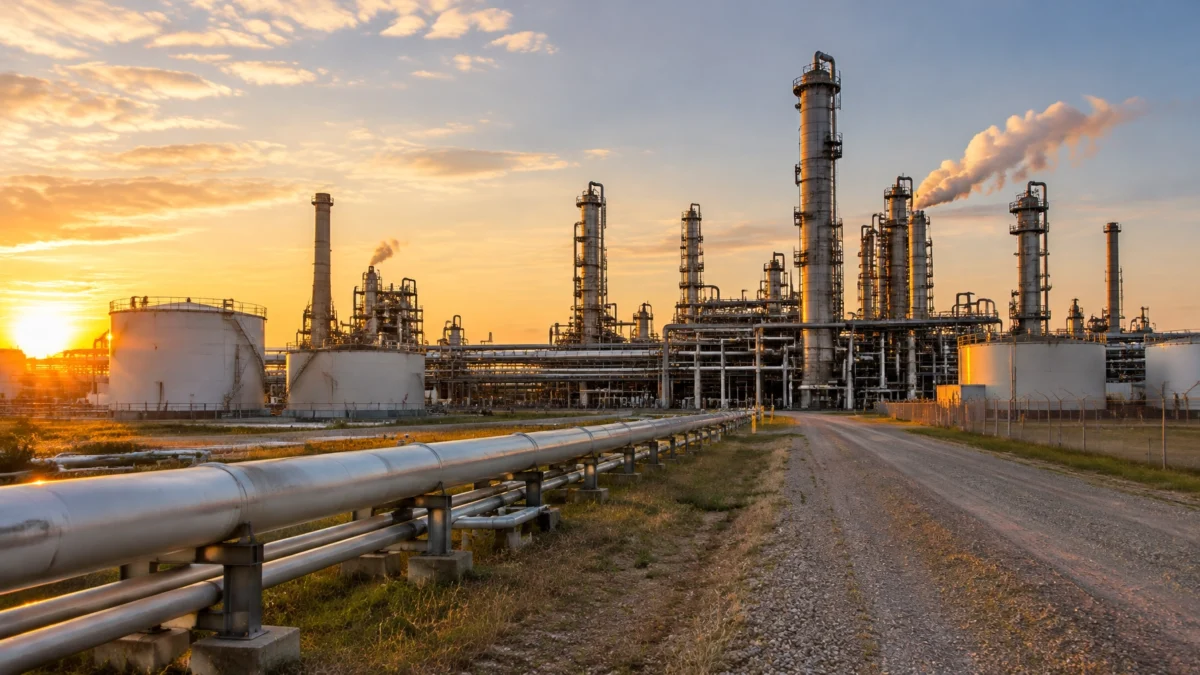
Venezuela has the world’s largest proven oil reserves. President Trump says the United States has now secured majority control over more than 65 billion barrels. What that actually means is more complicated, and potentially more important, than the headline.
President Donald Trump announced Friday that the United States has reached an agreement giving it majority control over more than 65 billion barrels of proven Venezuelan oil reserves.
That is an enormous number.
For perspective, the United States had approximately 45.95 billion barrels of proved crude oil and lease condensate reserves at the end of 2024, according to the U.S. Energy Information Administration. In other words, the amount of Venezuelan oil involved in Trump’s announcement is roughly 1.4 times the proved oil reserve base currently reported within the United States.
But that comparison needs context. America did not suddenly discover 65 billion barrels of oil beneath Texas, Alaska or the Gulf of Mexico, and 65 billion barrels are not about to appear on the global market. The oil remains in Venezuela.
The full agreement has not yet been made public, and some of the most important questions, including what “majority control” means legally, which fields are covered, who will develop them, and how quickly production could increase, remain unanswered.
That does not make the announcement insignificant. Quite the opposite. If the agreement ultimately operates as President Trump and his administration describe it, its real importance may be less about adding barrels to an American reserve calculation and more about something much bigger: energy security.
What Did President Trump Announce About Venezuelan Oil?
President Trump announced on August 28 that the United States had reached an agreement giving it majority control over more than 65 billion barrels of proven Venezuelan oil reserves.
Trump said the arrangement was made through a partnership with private business and would not require American taxpayer funding. He also said increased Venezuelan oil production could eventually help lower energy prices.
Secretary of State Marco Rubio has said the arrangement could lead to nearly $100 billion in private investment and help rebuild Venezuela’s struggling petroleum industry.
At this point, those remain administration projections. The complete agreement has not been publicly disclosed, which means there is still a considerable amount we do not know. An agreement involving oil reserves is not the same thing as commercially producing those reserves. The next phase will determine whether this becomes a historic energy development or simply an extraordinary resource opportunity.
Does the United States Now Own 65 Billion Barrels of Venezuelan Oil?
Not in the conventional sense. The United States has not added 65 billion barrels of oil to the domestic reserve base measured by the EIA. Those barrels are physically located in Venezuela.
The EIA reported that the United States had approximately 45.95 billion barrels of proved crude oil and lease condensate reserves at the end of 2024. That makes the Venezuelan number remarkable, but it is important not to mix two different concepts. Domestic proved reserves refer to oil located within the United States that can be commercially recovered under existing economic and operating conditions. Venezuelan oil does not suddenly become geographically American oil because the United States gains an ownership interest, economic interest, or some form of control over development.
So when Trump says the agreement more than doubles American oil reserves, the statement should be understood in the context of resources potentially coming under American influence or control. That is different from the EIA doubling its official estimate of U.S. domestic oil reserves. The distinction sounds technical. It is actually central to understanding the story.
How Much Oil Does Venezuela Have?
Venezuela has approximately 303 billion barrels of proven crude oil reserves, according to the U.S. Energy Information Administration, the largest proven crude oil reserve base in the world.
Yet Venezuela has never produced oil on a scale remotely proportional to the size of those reserves. That tells us something important about energy: having oil is not enough. A country also needs the ability to develop it.
Why Has Venezuela Produced So Little Oil Despite Having the World’s Largest Reserves?
Because oil production requires much more than geology. It requires capital, equipment, engineers and skilled workers, pipelines, processing systems, electricity, ports, export infrastructure, and customers. Above all, it requires confidence. Investors committing billions of dollars to projects expected to operate for decades need to believe contracts will be honored and that the political and regulatory environment will remain stable enough for them to recover their investment.
Venezuela has struggled with virtually every one of those issues. Years of political instability, U.S. sanctions, deteriorating infrastructure, insufficient investment, and the loss of technical expertise severely weakened the country’s petroleum industry.
It is also worth noting plainly what the piece does not otherwise address: Venezuela’s political and legal environment has changed dramatically in 2026. Nicolas Maduro was captured during a U.S. military operation in January, and Delcy Rodriguez subsequently became interim president. At the same time, U.S. sanctions policy toward Venezuela’s petroleum sector continues to operate through a changing series of Treasury Department licenses. Whether Washington’s newly announced “majority control” can be legally and commercially exercised over decades, and whether that framework survives future political changes in either country, remains an important unanswered question.
The character of Venezuela’s oil creates another challenge. Much of the country’s enormous resource base consists of extra heavy crude concentrated in the Orinoco Belt. Heavy crude can be extraordinarily valuable, but it is not the easiest oil in the world to produce or process. It often requires specialized equipment, blending, upgrading, and sophisticated refining capabilities. Venezuela’s problem was never that the country ran out of oil. The problem was that the system required to efficiently turn that oil into commercial production deteriorated.
Why Does the Proposed $100 Billion in Private Investment Matter?
Because without investment, the 65 billion barrels may remain exactly where they are: underground.
Rubio has said the agreement could eventually generate nearly $100 billion in private investment. That figure is not yet $100 billion of committed capital, but it gives us an idea of the scale required to meaningfully rebuild Venezuela’s energy system. Developing large oil resources can require investment in drilling programs, gathering infrastructure, pipelines, processing facilities, power systems, storage, ports, and export capacity.
Companies considering those investments will not base their decisions on politics or headlines. They will look at economics: What does it cost to produce the oil? What are the fiscal terms? Who owns the assets? How are revenues divided? Can contracts be enforced? What happens if political leadership changes? What happens if sanctions policy changes? What protection exists for invested capital?
Those questions may determine the future of the agreement more than any announcement made in Washington or Caracas. Governments can provide access. Only investment and execution produce oil.
Why Is Venezuelan Oil Important to U.S. Refineries?
This is one of the most overlooked parts of the story. Not every barrel of crude oil is the same. The shale revolution made the United States the world’s largest oil producer, but much of the growth in American production has come from relatively light crude.
Venezuela holds enormous volumes of heavy and extra heavy crude. Some of the most sophisticated refineries in the United States, particularly along the Gulf Coast, were designed or upgraded over decades to process heavier crude oils. That means Venezuelan petroleum potentially offers more than additional volume. It offers a crude grade that may complement the existing U.S. refining system.
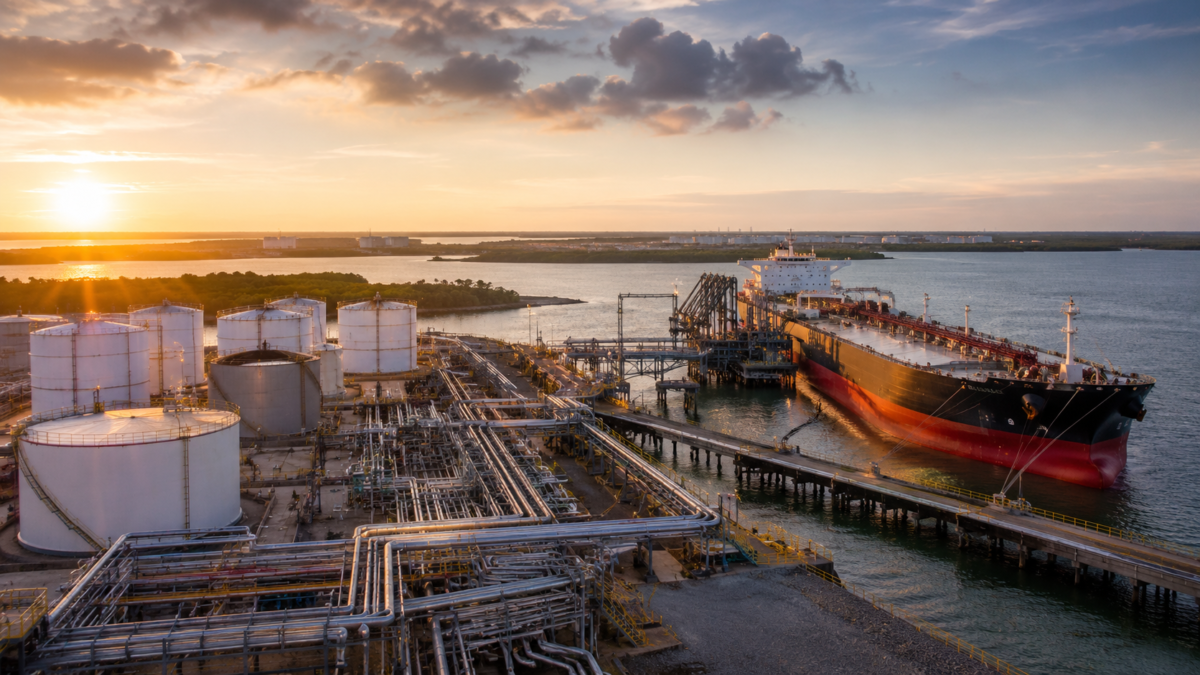
Geography also works in its favor. Venezuela sits in the Western Hemisphere, relatively close to the huge refining and petrochemical network stretching across Texas and Louisiana. That matters because energy security is not simply about owning resources. Distance matters. Transportation routes matter. Port access matters. Refining compatibility matters. And as the world has been reminded repeatedly, geopolitical chokepoints matter.
What Does Venezuela Have to Do With the Strait of Hormuz?
More than it might appear. Recent disruptions involving the Strait of Hormuz have again demonstrated how vulnerable global energy markets can become when production and transportation are concentrated around critical geographic corridors.
In its April 7, 2026 Short Term Energy Outlook, the EIA estimated that Iraq, Saudi Arabia, Kuwait, the United Arab Emirates, Qatar and Bahrain collectively shut in approximately 7.5 million barrels per day of crude oil production in March as oil flows through the Strait of Hormuz were constrained. Under the assumptions in that forecast, EIA projected shut in production could reach 9.1 million barrels per day in April.
That is why energy security cannot be measured only by counting reserves. The real questions are broader: Where is the energy produced? How does it reach consumers? How many transportation routes are available? How many suppliers exist? What happens if one route is disrupted? What alternatives are available?
Viewed through that lens, additional Venezuelan production becomes strategically interesting for the United States. Not because Venezuela can replace the Middle East, because it cannot, but because every viable source of energy within the Western Hemisphere gives the United States and its trading partners another option. And options are what create resilience.
Is Western Hemisphere Energy Becoming More Important?
I believe it is.
The American shale revolution completely changed the U.S. energy position. The United States went from worrying about long term petroleum scarcity to becoming the largest crude oil producer in the world. But being a major producer does not isolate the United States from global oil markets. Oil remains a global commodity. When supply is disrupted elsewhere in the world, international crude prices can rise, and American producers may produce more oil than ever while American consumers still feel the effects of events thousands of miles away.
That is why I believe the more useful goal today is not simply energy independence. It is energy resilience. A resilient energy system has choices: American production, Canadian production, Mexican production, Brazilian production, Guyana, potential Venezuelan production, multiple pipelines, multiple ports, multiple crude grades, multiple transportation routes, strong refining capacity, strategic inventories, and the ability to substitute one source for another when circumstances change. The country with the most options has the greatest ability to absorb disruption. That principle increasingly defines energy security.
Could Venezuelan Oil Lower Gasoline Prices in the United States?
Potentially, but not overnight.
President Trump says the agreement will eventually lead to substantially lower gasoline prices. The economic logic is straightforward: if Venezuela produces significantly more oil and those barrels increase global petroleum supply, additional supply can place downward pressure on crude prices when other market conditions remain equal. But we do not yet know whether that effect will be large, small, or somewhere in between. Investment must materialize, infrastructure must be repaired or built, fields must be developed, production must increase, oil must reach refiners, and the additional barrels must be meaningful relative to global supply and demand. That process does not happen simply because an agreement is announced.
There may, however, be a more immediate market effect. Oil markets are forward looking. Prices reflect not only the barrels available today, but expectations about future production, future demand, and future geopolitical risk. If markets become convinced that Venezuela is entering a sustained period of redevelopment, those expectations can influence prices before the production itself arrives.
Still, it would be irresponsible at this stage to attach a specific gasoline price reduction to the agreement. We do not have enough information yet.
What Does “Majority Control” Actually Mean?
This is probably the biggest unanswered question.
President Trump says the United States has secured majority control over more than 65 billion barrels of Venezuelan oil. But control can mean many things in an energy contract: equity, development rights, production rights, operating authority, revenue sharing, concessions, joint ventures, or some combination of those structures. Until the documents become public, we do not know exactly what the United States controls or how that control will operate.
We also do not know who owns the producing assets, who pays for development, which companies operate the fields, how revenues will be divided, what happens if Venezuela changes governments, what happens if a future U.S. administration takes a different position, or how long the agreement lasts. Those details will determine the real economic value of the arrangement. A headline can announce 65 billion barrels. A contract determines what those barrels are actually worth.
What Could Venezuela Gain From the Agreement?
Potentially a great deal. Venezuela sits on approximately 303 billion barrels of proven crude oil reserves. For a country with such extraordinary resources, the decline of its petroleum sector represents an enormous lost economic opportunity. A successful return of large scale investment could bring jobs, infrastructure, technology, export revenue, and economic activity.
But Venezuela’s history also offers a warning. Natural resource wealth by itself does not create prosperity. Governance matters. Investment policy matters. Contract stability matters. Transparency matters. Institutions matter. If this new relationship is going to succeed over the long term, investors will need confidence and Venezuelans will need to see tangible economic benefits. Otherwise, having the world’s largest proven oil reserves will continue to mean far less than it should.
Why This Story Is Bigger Than Venezuela
It would be easy to view this as another oil agreement. I think that misses what is happening in the global energy system. Energy demand continues to grow. Artificial intelligence and data centers are dramatically increasing electricity requirements, developing nations want more reliable energy rather than less, and industrial economies are rediscovering the importance of secure supply chains. Nuclear power is returning to strategic energy discussions, natural gas remains essential, and oil remains deeply embedded in transportation, manufacturing, agriculture, petrochemicals, and global commerce. Conflicts around the world continue reminding countries that energy security cannot be taken for granted.
The energy future is not developing as a neat replacement of one fuel with another. It is becoming a much more complicated system, and in complicated systems, diversity matters.
What We Know So Far
There are several facts we can establish. President Trump has announced that the United States secured majority control over more than 65 billion barrels of proven Venezuelan oil reserves. Venezuela has approximately 303 billion barrels of proven crude oil reserves, the largest national reserve base in the world. The United States had approximately 45.95 billion barrels of domestic proved crude oil and lease condensate reserves at the end of 2024. Those figures demonstrate the extraordinary scale of the announcement.
But several critical questions remain unanswered. The full agreement has not been publicly released. We do not yet know exactly what majority control means, all of the fields involved, the complete investment structure, how quickly production can increase, or how the current U.S. sanctions and licensing framework will interact with the deal. And we cannot yet calculate the ultimate effect on gasoline prices. Those are not reasons to dismiss the announcement. They are the reasons to keep watching it.
The Bottom Line
The 65 billion barrel figure will understandably dominate the headlines. But I do not believe that is the most important part of this story. The real story is what those barrels could represent: another major petroleum resource within America’s sphere of energy relationships, another potential source of heavy crude for U.S. refiners, another destination for private energy investment, another supply option within the Western Hemisphere, and another layer of protection against disruptions in an increasingly unpredictable global energy market.
None of those outcomes is guaranteed. There is still an enormous distance between reserves in the ground and commercially producing oil. The agreement still has to attract capital. Companies still have to invest. Infrastructure still has to work. Production still has to grow. And the political framework has to survive long enough for those investments to make economic sense.
That is what Energy Network Media Group will be watching next. Because the central lesson here goes well beyond Venezuela: the country with the most energy options may ultimately have the greatest strategic advantage. Multiple fuels. Multiple producers. Multiple transportation routes. Strong infrastructure. Strong refining capacity. Reliable domestic production. Reliable regional partners. And the ability to adapt when the world changes.
Energy security belongs to those with options.
Kym Bolado is CEO and Founder of Energy Network Media Group (ENMG) and host of the nationally syndicated Energy Mixx Radio Show.
Editorial Appendix: Sources and Search Optimization
This appendix is for editorial and publishing use. It can be removed from the reader facing version after the links and metadata are entered into the CMS.
Supporting Evidence
- Trump announcement and administration claims: CBS News, August 28, 2026. Reports Trump’s announcement of majority control over more than 65 billion barrels, the private business structure, taxpayer funding claim, gasoline price claim, Rubio’s nearly $100 billion private investment projection, and the fact that detailed terms were not yet public. https://www.cbsnews.com/news/trump-venezuela-oil-u-s-majority-control-65-billion-barrels/
- U.S. proved oil reserves: U.S. Energy Information Administration. U.S. proved crude oil and lease condensate reserves were approximately 45.95 billion barrels at year end 2024. https://www.eia.gov/naturalgas/crudeoilreserves/
- Venezuela reserves and oil sector conditions: U.S. Energy Information Administration, Venezuela Country Analysis. Supports approximately 303 billion barrels of proven crude oil reserves, the Orinoco Belt concentration, extra heavy crude characteristics, and the role of investment, infrastructure and technical capacity in production. https://www.eia.gov/international/content/analysis/countries_long/Venezuela/
- Venezuelan heavy crude and U.S. Gulf Coast refining: U.S. Energy Information Administration. Supports the compatibility of Venezuelan heavy crude with complex U.S. Gulf Coast refining capacity. https://www.eia.gov/todayinenergy/detail.php?id=60762
- Strait of Hormuz production shut ins: U.S. Energy Information Administration, April 7, 2026. EIA estimated 7.5 million barrels per day of crude oil production was shut in during March across Iraq, Saudi Arabia, Kuwait, the UAE, Qatar and Bahrain as Hormuz flows were constrained, with 9.1 million barrels per day projected for April under the forecast assumptions. https://www.eia.gov/pressroom/releases/press586.php
- Current Venezuela sanctions and licensing framework: U.S. Department of the Treasury, Office of Foreign Assets Control. Venezuela related sanctions program and current general licenses. https://ofac.treasury.gov/sanctions-programs-and-country-information/venezuela-related-sanctions
Keep In Touch with Shale Magazine
As the new era of energy unfolds, you can bet we’ll be the boots on the ground to keep you informed. Subscribe to Shale Magazine for sharp insight into the arenas that matter most to your life. And don’t forget to listen to our riveting podcast, The Energy Mixx Radio Show, where our very own Kym Bolado interviews the most extraordinary thought leaders, business innovators, and industry experts of our time.