The Southwest Needs More Than Natural Gas. It Needs a Way to Deliver It.
Abstract: As energy demand and industrial growth accelerate across the Southwest, the region faces a critical challenge: it has access to abundant natural gas but lacks the infrastructure needed to deliver it where demand is growing. Arizona and New Mexico are expected to require significantly more natural gas in the coming years, while the nearby Permian Basin continues to produce substantial supplies. This piece examines how insufficient pipeline capacity can constrain that opportunity and contribute to natural gas flaring in Texas. It argues that infrastructure projects such as the Desert Southwest Pipeline, which would transport up to 2.3 billion cubic feet of natural gas per day from the Permian Basin to New Mexico and Arizona, can strengthen energy reliability, support economic growth, reduce wasted natural gas, and help meet rising electricity demand. With the United States projected to require $1 trillion in energy infrastructure investment by 2052, expanding pipeline capacity will be essential to fully utilizing American energy resources and securing the Southwest’s energy future.
America’s next energy crisis won’t be caused by a lack of natural gas, it will be caused by a lack of infrastructure to deliver it. A recent report by the INGAA Foundation and University of Houston found that the United States will need $1 trillion in investment by 2052 for U.S. energy infrastructure expansion. That means at least 37,000 miles of additional natural gas transmission pipelines that the U.S. needs to meet growing energy demand. The DOE estimates total U.S. electricity demand could increase 15–20% over the next decade, and one region that especially needs a drastic increase in energy infrastructure to survive over the next ten years is the Southwest.
A Region Outgrowing Its Infrastructure
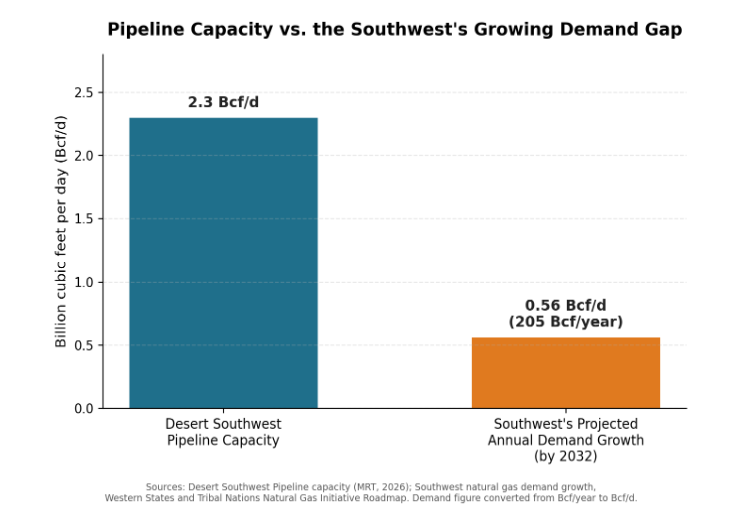
From Arizona to New Mexico, states in the Southwest are facing a recurring problem: growing energy demand without the infrastructure to meet it. These states are becoming hubs for industrial growth, exceeding national averages and quickly becoming one of the fastest growing economic areas in the United States. However, these states lack the natural gas infrastructure needed to meet the growing economy. The Southwest is projected to see an additional 205 Bcf of natural gas demand each year by 2032. Fortunately, the region sits next to one of the world’s most productive energy resources: the Permian Basin.
The Permian’s Flaring Problem
The Permian Basin, which is primarily located in West Texas, has experienced a 50% increase in natural gas production since 2018. With an insufficient quantity of pipelines to move that gas to market, the region has seen increased flaring in Texas, meaning untransported gas is burned and released into the atmosphere. Not only is this a waste of gas that regions outside of Texas in the Southwest need, but it is horrible for the environment.
Abundant natural gas alone won’t keep the lights on. Without the infrastructure to move natural gas where it’s needed, the Permian’s full potential cannot be realized. That’s why projects like the Desert Southwest Pipeline are so critical.
Why the Desert Southwest Pipeline Matters
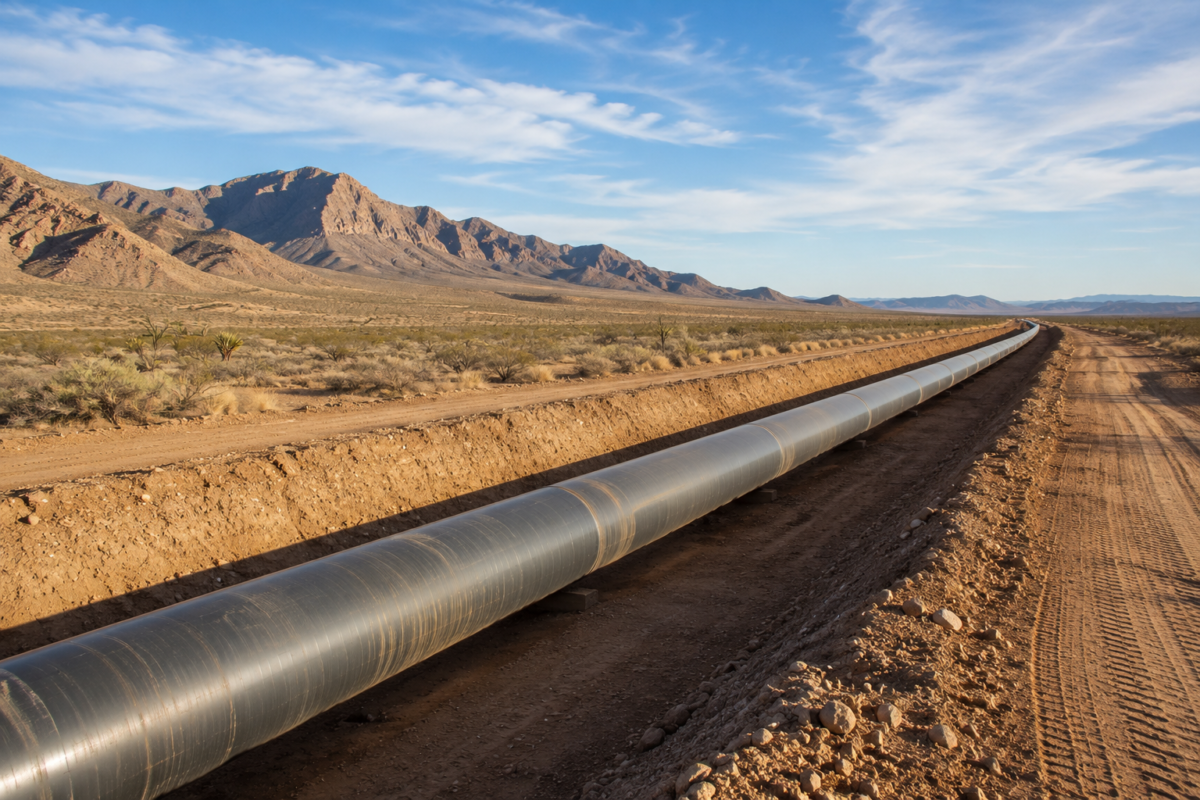
The Desert Southwest Pipeline would transport 2.3 billion cubic feet per day (Bcf/d) of natural gas from the Permian Basin in Texas to New Mexico and Arizona, two Southwestern states experiencing rapid population growth, expanding manufacturing, and rising electricity demand but lacking sufficient pipeline capacity and in-state natural gas production. The pipeline would strengthen energy reliability by ensuring homes, businesses, power plants, and emerging industries have access to affordable, dependable fuel, particularly during periods of extreme summer heat when electricity demand peaks. By connecting one of the United States’ most productive natural gas basins with expanding markets, the pipeline would also help reduce energy prices and minimize the risk of energy shortages.
Turning Waste Into Reliable Power
At the same time, the Desert Southwest Pipeline would reduce the need for producers in the Permian Basin to flare natural gas due to pipeline constraints. That means less wasted energy and lower greenhouse gas emissions. Rather than allowing valuable fuel to be burned off, the Desert Southwest Pipeline would deliver it to communities that need it most while strengthening energy security across the Southwest corridor.
A Test of America’s Energy Priorities
The Desert Southwest Pipeline is exactly the kind of private infrastructure investment America needs to meet rising energy demand. It will strengthen the Southwest’s energy future by delivering affordable, reliable natural gas to rapidly growing communities while reducing unnecessary flaring and making better use of American energy resources. As electricity demand continues to increase and new industries expand, delaying projects like this is no longer an option. If the United States is serious about ensuring affordable energy, supporting economic growth, and maintaining its position as a global energy leader, it must embrace the infrastructure that makes it possible.
Guest Contributor Note
This article was submitted by a guest contributor and reflects the author’s professional experience, analysis, and opinions. It was reviewed by ENMG for editorial quality, accuracy, and adherence to our publication standards. Any affiliations, disclosures, or potential conflicts of interest identified by the author are noted within the article where applicable.

Author Bio: Guy Caruso is a senior adviser with the Energy Security and Climate Change Program at the Center for Strategic and International Studies (CSIS) and Strategic Advisor for Grow America’s Infrastructure Now. He served as administrator of the U.S. Energy Information Administration from 2002 to 2008 and brings more than 40 years of experience in energy markets, policy, economics, and security. Caruso has held senior leadership positions at the U.S. Department of Energy and previously served as an international energy economist at the CIA. His energy analysis and commentary have appeared through CSIS and in outlets including Forbes and The Hill.
Keep In Touch with Shale Magazine
As the new era of energy unfolds, you can bet we’ll be the boots on the ground to keep you informed. Subscribe to Shale Magazine for sharp insight into the arenas that matter most to your life. And don’t forget to listen to our riveting podcast, The Energy Mixx Radio Show, where our very own Kym Bolado interviews the most extraordinary thought leaders, business innovators, and industry experts of our time.